

 Solitaire
 Hello
Hello
 Paved
Paved
 You and I
 Bezel/Setting
 Vintage
 Three diamonds
 Diamond eternity band
 Other Gems
 Round
Round
 Emerald
 Oval
Oval
 Pear
Pear
 Marquess
 Cushion
 Radiant
 18k White Gold
 18K Yellow Gold
 18K Rose Gold
 18k Yellow Gold and White Gold


September 17, 2026
Choosing the wrong diamond isn't a question of budget; it’s a question of information. And if there is one variable that makes the difference between a stone that captivates and one that goes unnoticed, it is the cut. Before focusing on carat weight or price, understanding the different types of diamond cuts is what will make the difference when it comes to making the best decision.
A diamond’s cut and shape are not the same
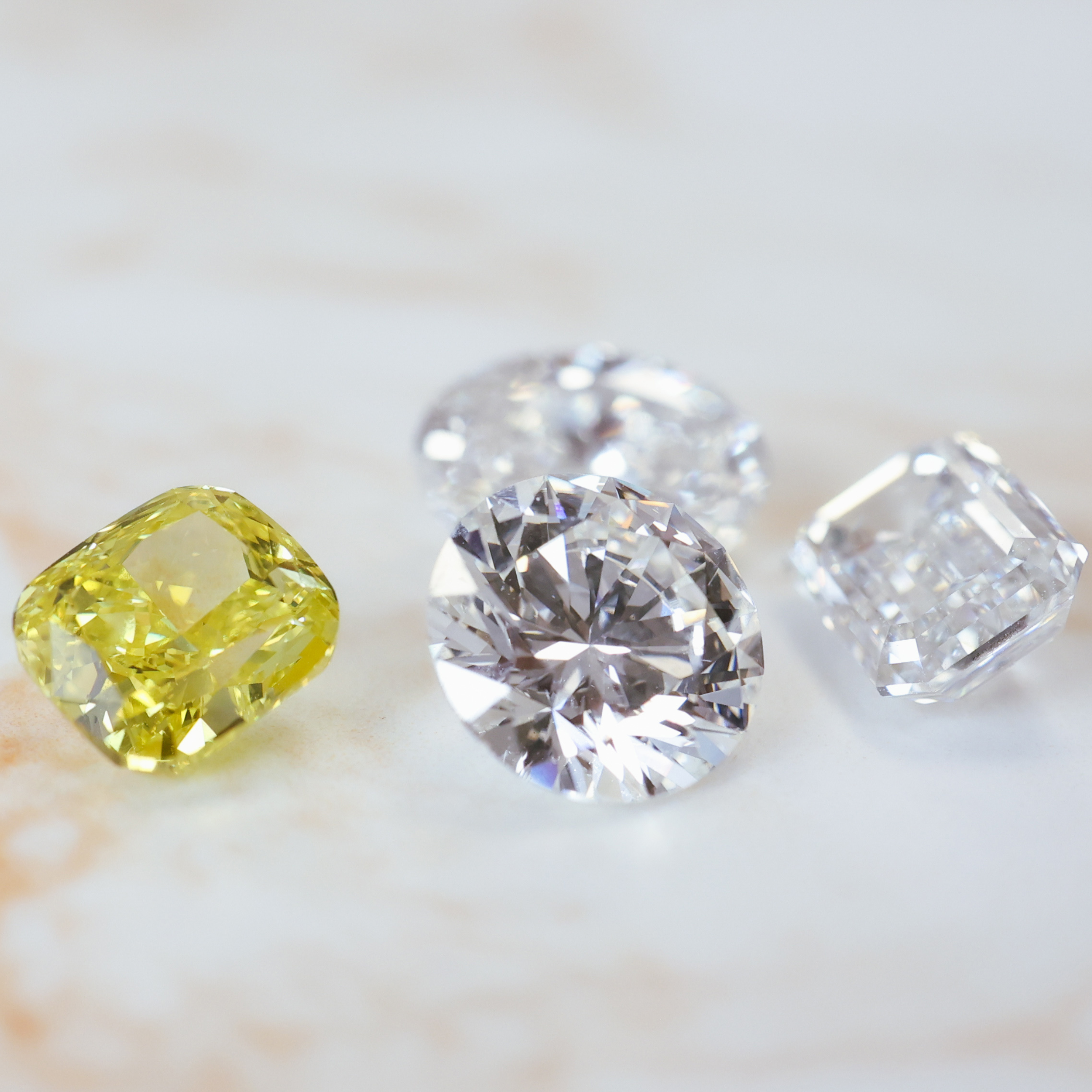
This is the first misunderstanding worth clearing up. When we talk about the shape of a diamond, we are referring to its silhouette as seen from above: round, oval, pear, square. When we talk about the cut, we are referring to how its facets are crafted and how well they interact with light.
A diamond can have a beautiful oval shape and yet have a mediocre cut that leaves it lifeless. That is why, when evaluating the quality of a diamond, the cut is the factor that has the most visual impact. An excellent cut converts the light that enters into sparkles that bounce back to the observer’s eye. A poor cut lets it escape out the sides or through the bottom, and the result is a dull stone with no character.
The Gemological Institute of America classifies the quality of the cut in round diamonds into five levels: Excellent, Very Good, Good, Fair, and Poor. For the rest of the shapes, there is no standardized official scale, which makes it even more important to know what to look for in each case.
How cut quality affects a diamond's brilliance
A diamond’s brilliance isn't magic or luck. It’s geometry. Each facet acts as an internal mirror that captures light, redirects it, and sends it back up in the form of sparkles. When the cut proportions are correct, the table percentage and depth work in harmony to create that luminous effect that makes a quality diamond unmistakable.
If the cut is too shallow, light escapes through the bottom of the stone and the diamond looks opaque. If it is too deep, light is lost out the sides, darkening the stone. In both cases, the result is a lifeless diamond regardless of its color or clarity.
Added to this are two additional factors that influence the final result: symmetry (all facets being perfectly aligned and balanced with each other) and polish (the quality of the finish of each facet after the cutting process). A diamond with excellent symmetry and polish maximizes every ray of light that passes through the stone. For this reason, when looking for a lab-grown diamond engagement ring, pay attention not only to the carat weight but also to these cut quality factors.
The main types of diamond cuts
The round brilliant cut, the universal benchmark
The round brilliant cut is the most popular in the world for very specific reasons. Its 58 facets are designed with mathematical precision to maximize light reflection, offering the greatest brilliance possible among all existing diamond cut types. It accounts for more than 70% of all global diamond sales and remains the first choice for round diamond engagement rings due to its ability to shine in any lighting condition.
However, there is a cost. To obtain a well-proportioned round diamond, approximately 60% of the rough stone is lost during the cutting process, which increases its price per carat compared to other shapes. This is why a round diamond can cost 25% to 40% more than other shapes with similar characteristics. If brilliance is your absolute priority and you are willing to invest more in it, the round brilliant is the undisputed choice.

The oval cut, an elegant shape to visually lengthen the hand
The oval cut has gained a lot of prominence in recent years, and it's no coincidence. Its elongated shape distributes carat weight so that the stone looks visually larger on the finger than an equivalent round, sometimes up to 10-15% larger. Furthermore, the elongating effect it produces on the finger is very flattering.
From a price perspective, an oval offers a very competitive quality-to-brilliance ratio compared to the round, while maintaining remarkable luminosity. Like the round, it has a brilliant-style facet pattern that guarantees vivid sparkles. The only aspect to watch for is the so-called "bow-tie effect," a dark shadow in the center of the stone that can appear if the proportions are not right. To avoid it, look for length-to-width ratios between 1.35 and 1.50 and always check the diamond on video or in person before buying. Oval engagement rings are currently one of the most chosen options for brides with modern and sophisticated taste.

The princess cut, geometry and fire in its purest state
The princess cut is the most popular square shape among the different types of diamond cuts. Its straight corners and multiple brilliant facets create a very intense play of light, with more angular and modern sparkles than the round. It is especially attractive for those looking for a design with clean, contemporary lines.
A practical advantage is that the rough stone is used more efficiently during the cutting process, which results in a more accessible price per carat than the round. However, the sharp corners are the most delicate point: they require a setting that protects them, such as V-prongs, to avoid chipping with daily use. If you are drawn to a geometric and current style, princess cut engagement rings are a brilliant option in every sense.
The cushion cut, romance and warmth in every sparkle
The cushion cut has a square or slightly rectangular contour with rounded corners that give it that soft look from which it takes its name. Unlike the round, its facets produce larger and more diffused sparkles, with a warmer and more romantic quality of light that is reminiscent of antique stones.
It is a very versatile cut that looks especially good in vintage-style settings or halo designs, where the central diamond is surrounded by a crown of smaller brilliants. Another advantage is that it hides possible internal inclusions well, as its facet pattern distracts the eye. Cushion cut engagement rings combine tradition and elegance in a way that never goes out of style.

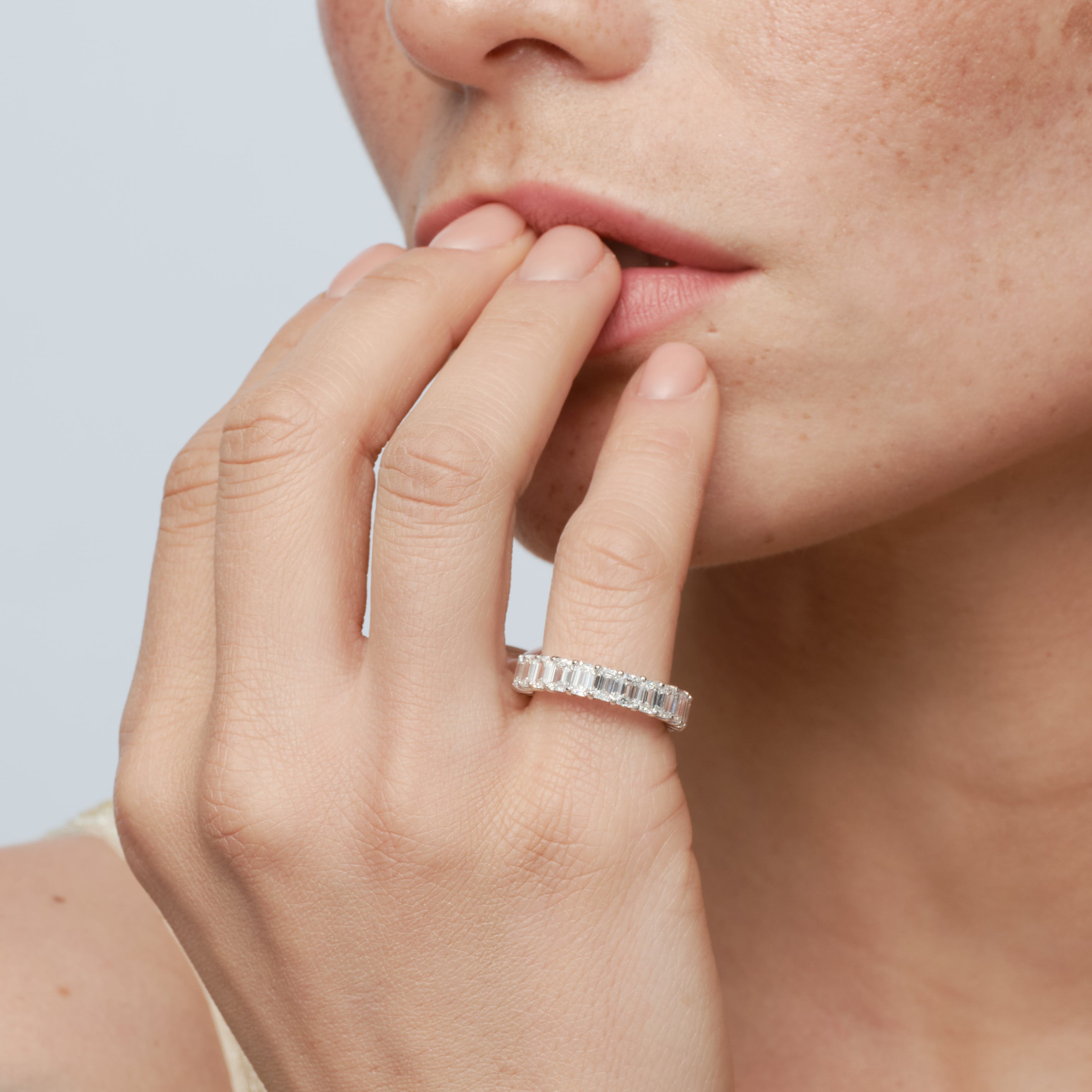
The emerald cut, the elegance of that which needs no hiding
The emerald cut is radically different from the previous ones. It belongs to the category of step cuts, where the facets are parallel to each other and form steps that descend toward the culet of the stone. This creates a visual effect very different from that of brilliant cuts: instead of small, rapid sparkles, the emerald offers long, elegant reflections, like a mirror of infinite depth.
Its transparency is its greatest distinguishing feature and also the one that demands the most. By having fewer facets to act as distractors, the emerald cut allows the interior of the stone to be seen very clearly, which makes the quality of the diamond more evident. It requires diamonds with good clarity and color to shine in all their splendor. It doesn't seek to attract attention by shouting: it wins you over with subtlety. Emerald engagement rings are the choice of those who understand that true elegance doesn't need to be loud.

The marquise cut, maximum presence with a character of its own
The marquise cut has an oval silhouette with two pointed ends, similar to that of an almond-shaped eye. It is the shape that offers the greatest visible surface area per carat of all existing ones, making it an unbeatable option for those who want their diamond to have the greatest possible presence on the finger.
Its pointed ends require special protection in the setting to avoid damage, and like the oval, it can present the bow-tie effect if the proportions are not correct. Color also tends to be more noticeable at the tips, so it is advisable to choose higher color grades if you are looking for a stone that looks completely colorless. Marquise cut engagement rings have a very defined personality and are perfect for those who do not want to go unnoticed.

The pear cut, an elegant and very recognizable shape
The pear cut fuses the best of the round and the marquise: it has a rounded lower end and a pointed upper one, creating that inverted teardrop silhouette that looks so good as the central stone of a ring. Like the oval, it visually lengthens the finger, and its brilliance is comparable to that of the most luminous brilliant cuts.
It can be worn with the point facing the fingernail or toward the wrist depending on personal preference, which adds versatility to the design. The pointed tip also needs a protective prong. Pear diamond engagement rings are one of the most romantic and original options on the market, with a profile increasingly present in high-end jewelry.

Comparison of the main types of diamond cuts
To help you visualize the key differences between the most common types of cuts, here is a summary that crosses the most relevant factors:
| Cut | Type of brilliance | Visual size | Relative price | Ideal for |
|---|---|---|---|---|
| Round brilliant | Maximum, vivid sparkles | Standard | High | Guaranteed maximum brilliance |
| Oval | High, soft sparkles | Larger than round | Medium | Lengthening effect and balanced price |
| Princess | High, angular sparkles | Standard | Medium-low | Modern and geometric designs |
| Cushion | Medium, warm sparkles | Standard | Medium | Romantic and vintage aesthetic |
| Emerald | Long reflections, mirror effect | Less visual depth | Medium | Discreet and sophisticated elegance |
| Marquise | High, vivid sparkles | Largest of all | Medium | Maximum presence on the finger |
| Pear | High, vivid sparkles | Larger than round | Medium | Originality and lengthening effect |
What to consider when choosing the cut for your engagement ring
Choosing between different types of diamond cuts is not just a question of aesthetics. There are practical factors that also come into play and are worth considering before making a decision.
The lifestyle of the wearer is a fundamental starting point. Shapes with points, such as the marquise or the pear, are more prone to snagging and suffering small bumps in daily use, so they require more protective settings. The oval and the cushion, with their rounded ends, are safer options for those who lead an active life.
Finger proportions also influence the decision. Elongated shapes like the oval, the marquise, or the pear visually slenderize shorter or wider fingers. The round and the cushion work in a more universal way. The princess cut, with its square geometry, tends to stand out especially well on thinner, slender fingers.
The quality of the stone you can afford is another decisive factor. Step cuts like the emerald require higher clarity and color to look their best, while brilliant cuts like the cushion or the round hide potential inclusions better thanks to their greater number of facets.
The type of setting is also key. Certain cuts look their best in specific settings: the emerald in a bezel or rub-over, the oval and pear in a solitaire or pavé, the cushion in a halo. Thinking of the ring as a whole, rather than just the stone, will help you make the best decision.
The difference between brilliant cuts and step cuts
A simple way to mentally organize all diamond cut types is to divide them into two major families.
Brilliant cuts include the round, oval, marquise, pear, cushion, and princess. They have many triangular or rhombus-shaped facets that maximize light sparkle. They are visually more dynamic and are more forgiving of the stone's imperfections.
Step cuts include the emerald and Asscher. Their facets are rectangular and parallel, which creates long, deep reflections instead of quick sparkles. They are more elegant and understated, but they require higher internal diamond quality because their transparency hides nothing.
Understanding this distinction is one of the keys to making the choice of cut not an overwhelming process, but one with clear criteria. If you would like to delve deeper into the available options and see how each cut looks in an actual design, you can book an appointment at our showroom in Madrid to study the stones calmly with personalized advice.
Why the cut matters more than the carat weight
There is a widespread belief that leads many people to prioritize the size of the diamond above all else. However, among specialists, there is a clear consensus: a 1-carat diamond with an excellent cut sparkles more and is more visually attractive than a 1.5-carat diamond with a mediocre cut. With lab-grown diamonds, this logic makes even more sense: their more accessible price per carat allows you to prioritize the cut without sacrificing too much on size.
Carat weight measures the weight of the stone, not its size or its brilliance. A poorly cut diamond can have much of its weight hidden in its depth, making it look smaller than it is. Conversely, a well-proportioned diamond distributes its weight so that the stone has the largest visible surface area possible and, above all, interacts with light optimally.
Knowing the different types of diamond cuts and understanding how each one works is, ultimately, what allows you to buy with both your head and your heart. It is not about spending more or less, but about knowing exactly what you are buying and why you are choosing it.
If you have questions about which cut is most suitable for you or the person you want to surprise, our team can help you resolve them.

Gabriela Melguizo
Founding Partner & Brand Director
Learn more

The best jewelry for Mother's Day that she will never forget
There are gifts that are used for a season and gifts that are carried for a lifetime. When Mother's Day approaches, the question is not just "what should I get her?", but "what should I get her tha...
Read more
