

 Solitaire
 Hello
Hello
 Paved
Paved
 You and I
 Bezel/Setting
 Vintage
 Three diamonds
 Diamond eternity band
 Other Gems
 Round
Round
 Emerald
 Oval
Oval
 Pear
Pear
 Marquess
 Cushion
 Radiant
 18k White Gold
 18K Yellow Gold
 18K Rose Gold
 18k Yellow Gold and White Gold


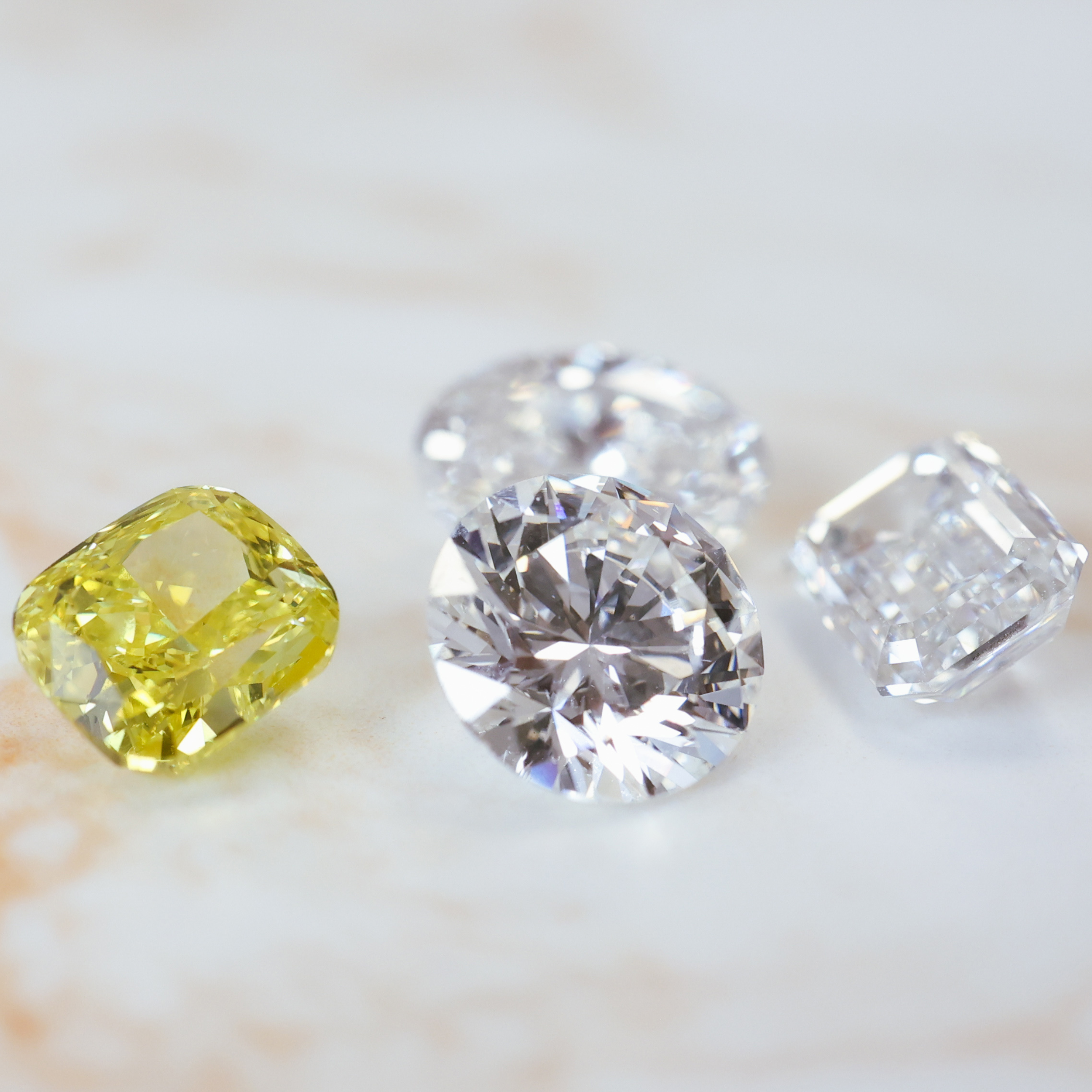

Why is a diamond certificate so important?
When you decide to buy a diamond, whether it's a mined or lab-grown diamond, the diamond certificate is your best ally. Think of it as your gem's ID: an official document that details all its characteristics and guarantees its authenticity. Without this certificate, you would be buying "blindly," unable to truly verify what you are acquiring or if the price you are paying is fair.
Lab-grown diamonds have a certificate exactly like natural diamonds, issued by the same international gemological laboratories, also known as a diamond gemological certificate. This document not only brings transparency to your purchase but also protects your investment by certifying the exact characteristics of your diamond and its real value.
What information does a diamond certificate of authenticity contain?
A diamond certificate of authenticity is much more than a simple document. It is a technical report prepared by expert gemologists who analyze the stone with high-precision equipment to determine its exact characteristics.
This report allows for a precise understanding of the diamond's quality and an objective comparison of different stones.
The 4 Cs: your diamond's DNA
The famous 4 Cs are the basis of any gemological certificate:
● Carat: the exact weight of the diamond
● Color: the degree of coloration or absence thereof
● Clarity: internal inclusions or imperfections
● Cut: the quality of the cut and how it reflects light
These four characteristics directly determine the value of the diamond and are the only objective way to verify a diamond. Without the certificate, you have no way to independently confirm these properties.
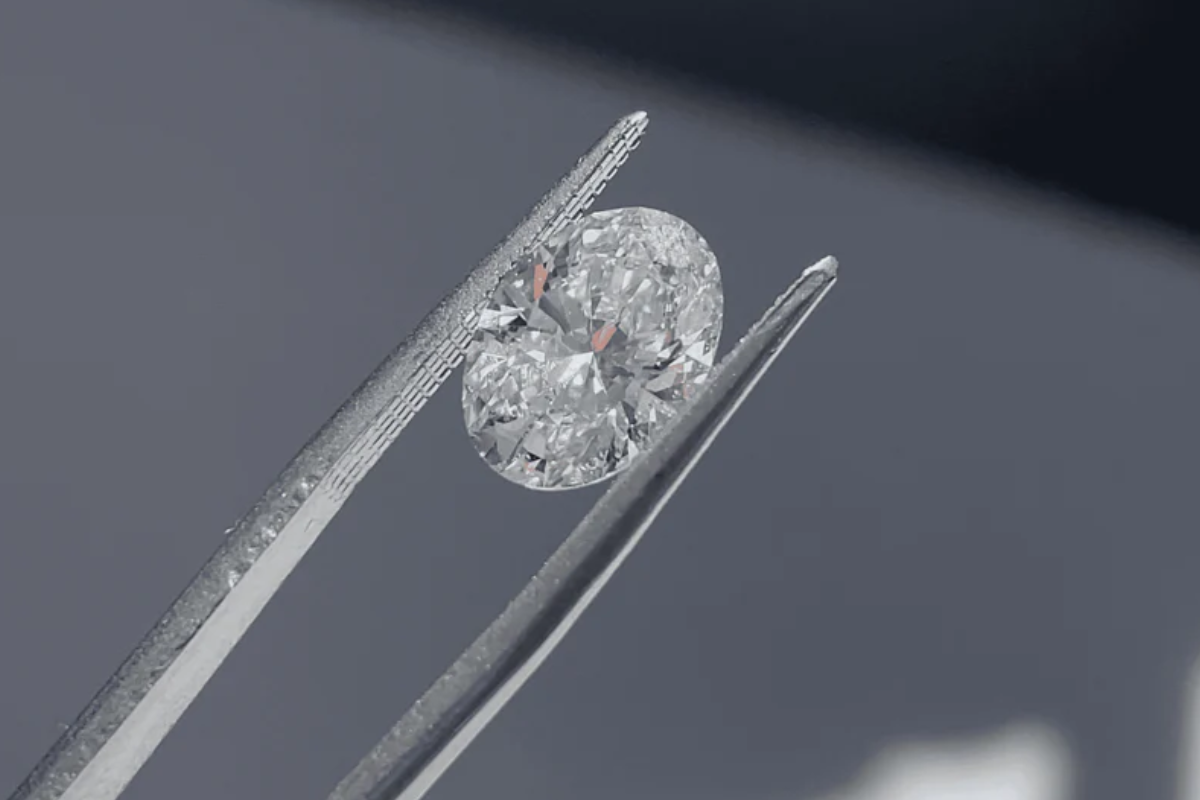
Beyond the 4 Cs: Proportions and Laser Inscription
In addition to the 4 Cs, the certificate includes other very important information:
● Fluorescence: how the diamond reacts under ultraviolet light
● Polish and symmetry: quality of the gemstone's finish
● Inclusion diagram: a map of the diamond's internal characteristics
● Laser inscription: certificate number microscopically engraved on the diamond's girdle
Laser inscription allows the physical diamond to be linked to its certificate, ensuring that both correspond exactly to the same stone.
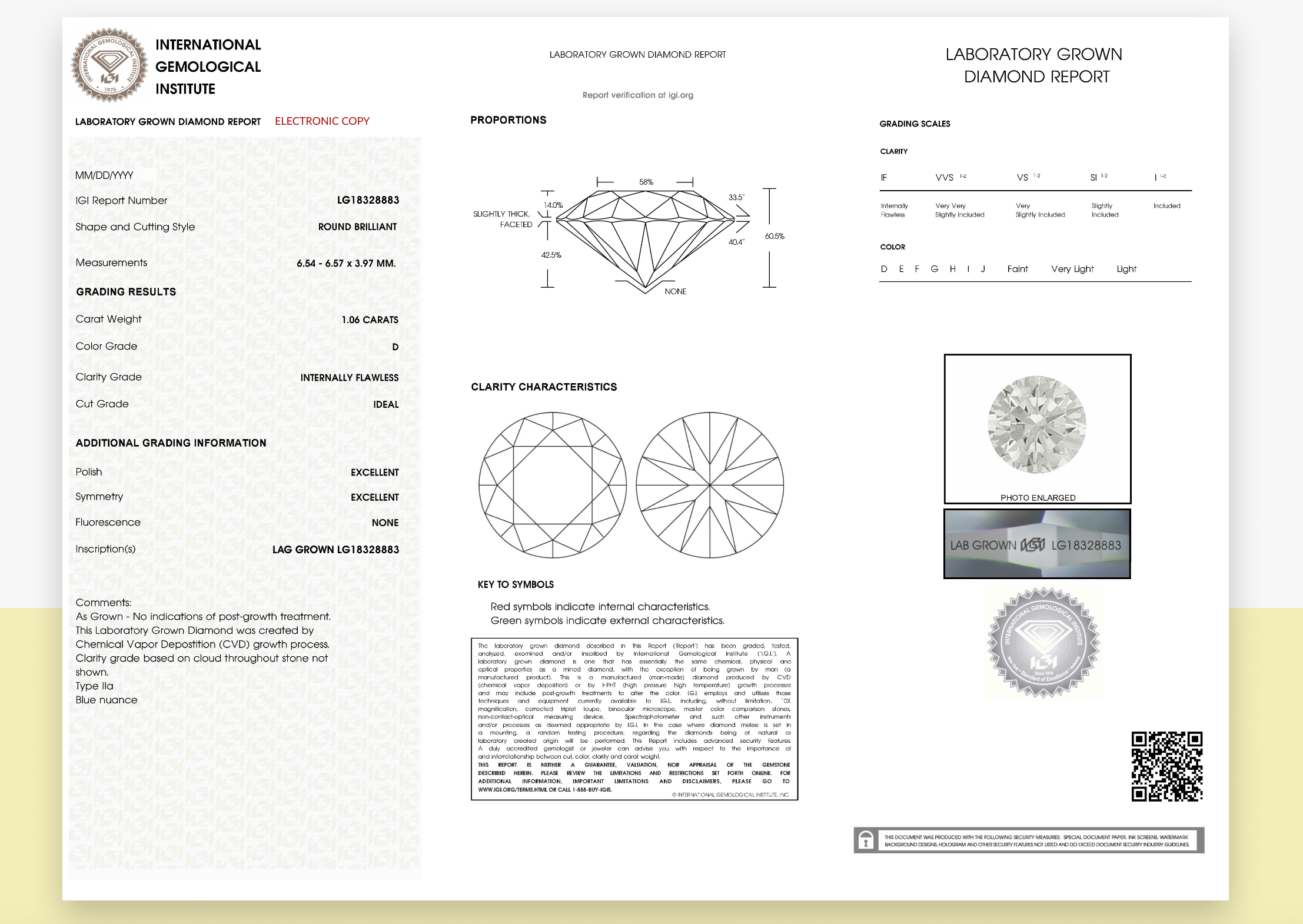
Example of a lab-grown diamond certificate
A gemological certificate usually includes several sections detailing all the characteristics of the analyzed stone.
You will typically find:
● certificate number
● carat weight
● color grade
● clarity grade
● cut quality
● exact diamond measurements
● inclusion plot
This document allows for the unique identification of the diamond and verification of its characteristics at any time.
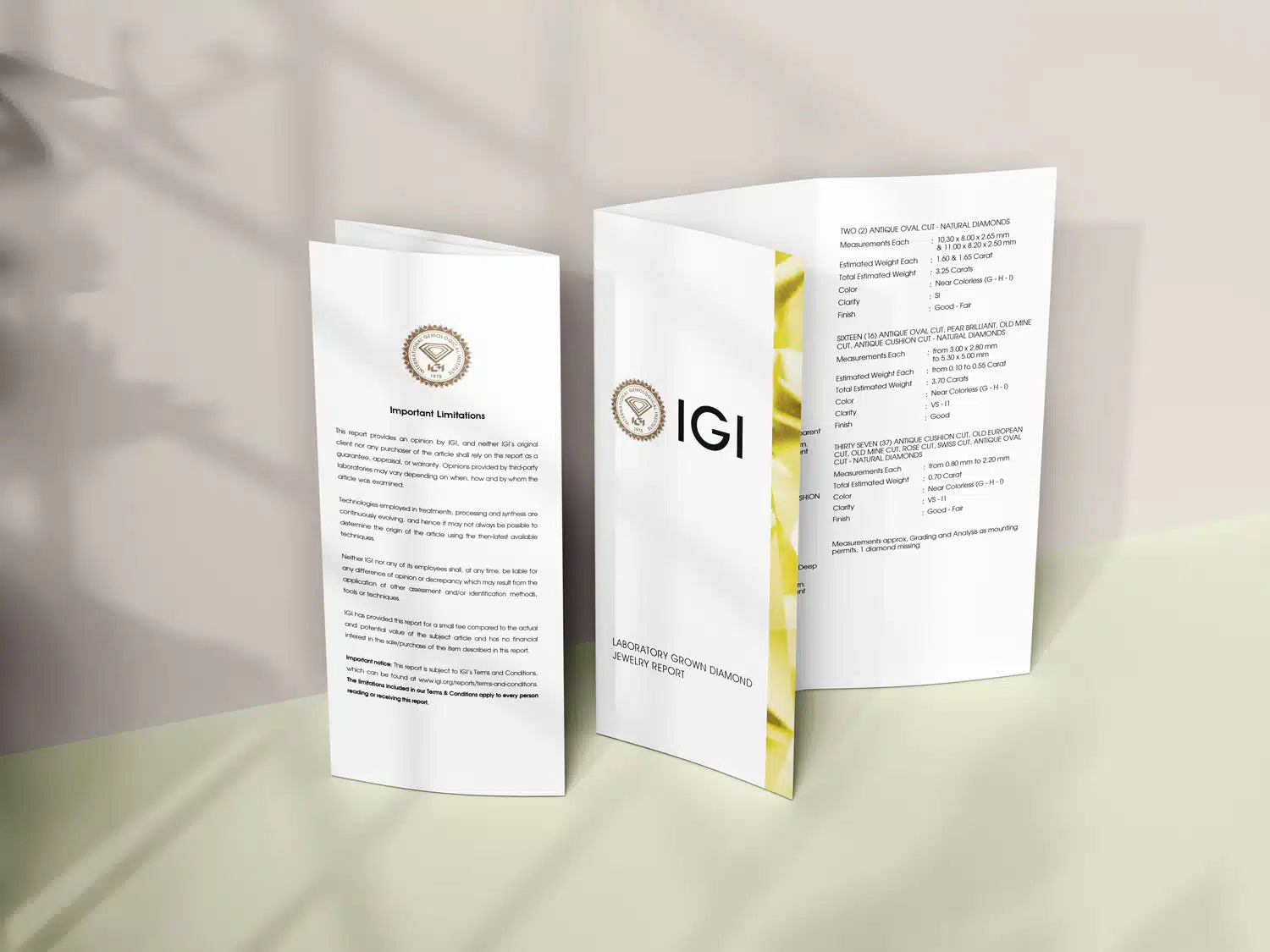
How to Read a Diamond Certificate Step by Step
Although it may seem like a complex technical document, reading a diamond certificate is relatively straightforward.
The main elements you should check are:
● Certificate number: unique diamond identifier
● Carat weight: diamond size
● Color: degree of transparency or absence of color
● Clarity: presence of internal inclusions
● Cut: quality of the cut and ability to reflect light
● Proportions: exact measurements of the diamond
This information allows you to understand the quality of the stone and compare it with other similar diamonds.
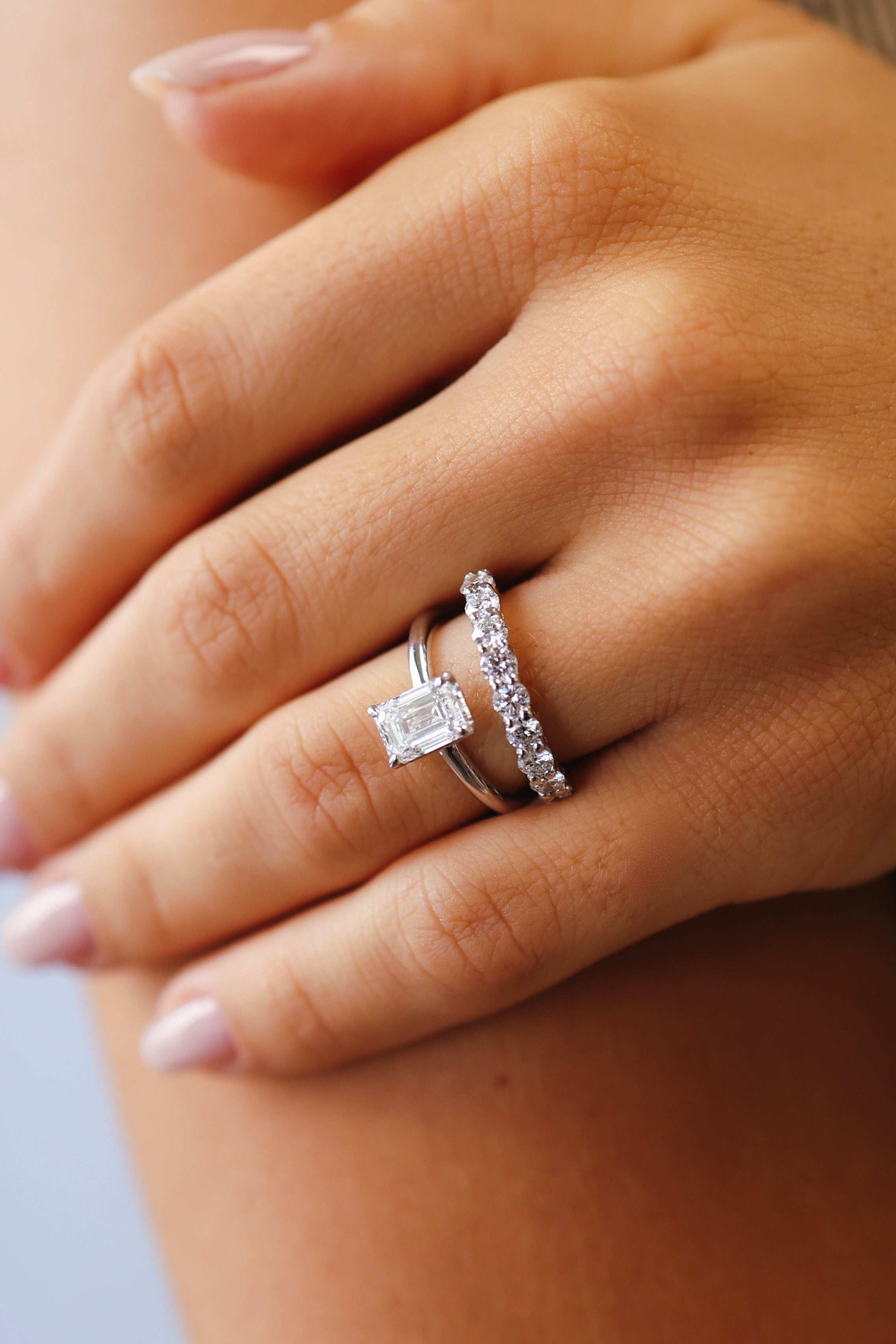
In-house certificates vs. independent certificates: Key gemological laboratories for diamond certification
Not all certificates hold the same value in the market. When you purchase a certified diamond, it is important to know which laboratory issued the report.
IGI: the gold standard for lab-grown diamonds
The IGI (International Gemological Institute) certificate is currently the most common and respected specifically for lab-grown diamonds. With a presence in major cities around the world and decades of experience, IGI has been a pioneer in establishing certification standards for lab-created gems.
Its rigorous methodology and specialization in this type of diamond make it the industry benchmark. Most jewelers specializing in lab-grown or mined diamonds work with IGI certificates due to their reliability and international recognition.
GIA: the historical benchmark in gemology
The Gemological Institute of America (GIA) is the institution that developed the 4 Cs system in the 1950s and for decades has been considered the highest authority in gemology. Traditionally focused on natural diamonds, the GIA certificate also certifies lab-grown diamonds. Its historical prestige remains undeniable, and a GIA certificate is always a guarantee of rigorous evaluation.
IGI certificate vs GIA certificate
IGI (International Gemological Institute) and GIA (Gemological Institute of America) are both independent organizations that analyze each stone using standardized technical criteria and issue detailed reports on their characteristics.
The GIA is historically considered one of the highest authorities in gemology. It was the institution that established the 4C (cut, color, clarity, and carat) grading system and for decades has been the main reference in natural diamond certification.
For its part, IGI has become one of the most widely used laboratories for the certification of lab-grown diamonds, as it has developed a great specialization in this type of gem and has a presence in the main international centers of the sector.
In practice, both laboratories apply rigorous analysis processes and offer detailed reports that allow for identifying the diamond, knowing its quality, and verifying its authenticity. Furthermore, both IGI and GIA certificates can be checked online by entering the certificate number into the official database of each institution.
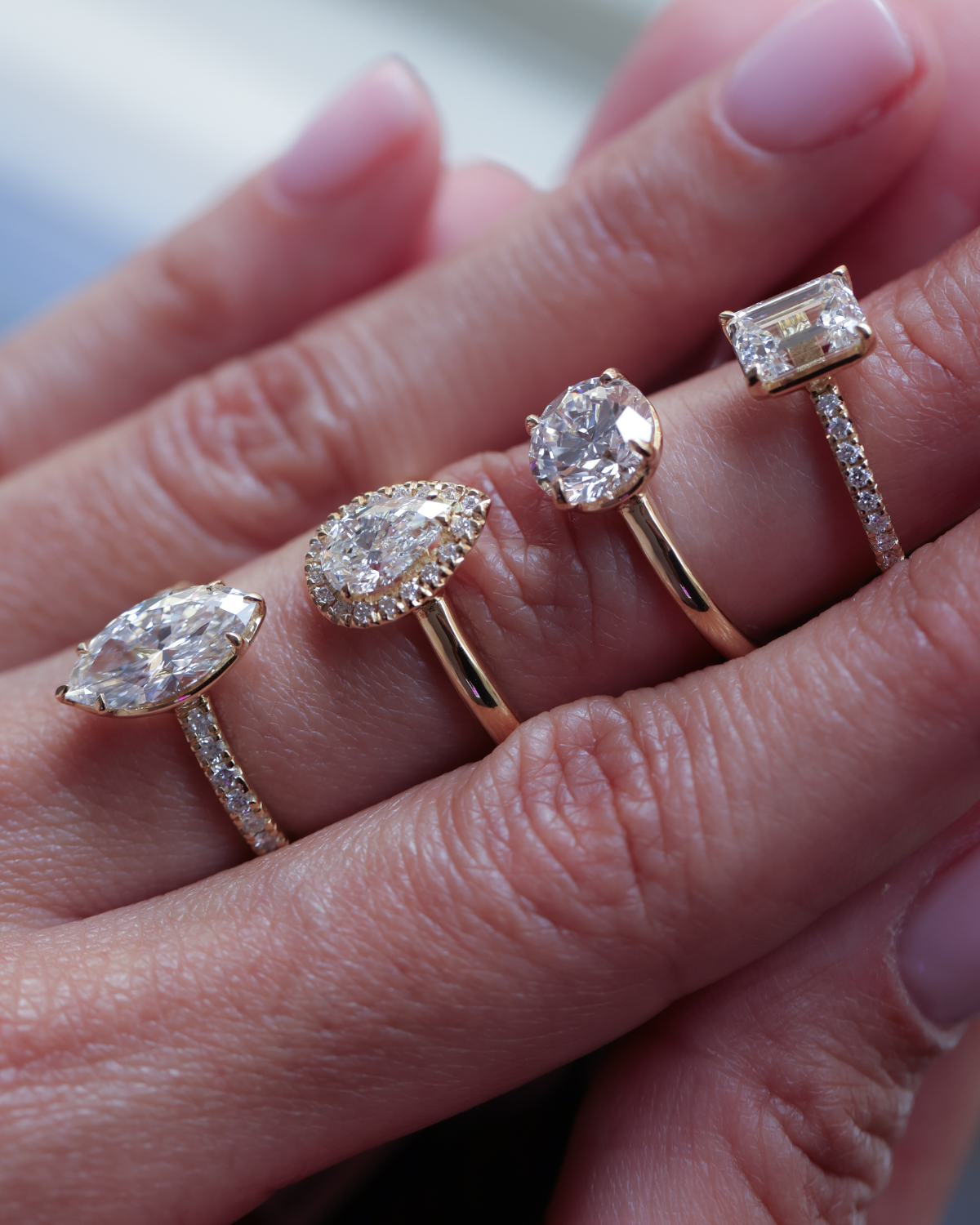
In-house certificates vs. independent certificates: why does the difference matter?
Some jewelers issue their own certificates for the diamonds they sell. However, these documents do not have the same value as a certificate issued by an independent laboratory.
The limitations of in-house certificates
- Lack of impartiality: As both judge and party, the evaluation may be less rigorous or inflated to justify higher prices
- No universal recognition: They are not valid outside of that specific brand, which greatly complicates any future appraisal or resale
- Not externally verifiable: You cannot cross-reference the information with an independent database
- Variable standards: Each brand may apply different criteria, making objective comparisons impossible
The peace of mind of official certificates
An IGI certificate or GIA certificate offers you guarantees that no in-house certificate can match:
- International recognition: Valid in any jewelry store worldwide
- Online verification: You can check the authenticity of the certificate at any time
- Audited protocols: They follow industry-recognized standards
When you buy a diamond, you need the security of a certificate of authenticity issued by an independent laboratory. It is the only way to guarantee that the diamond's characteristics indicated to you correspond to reality.
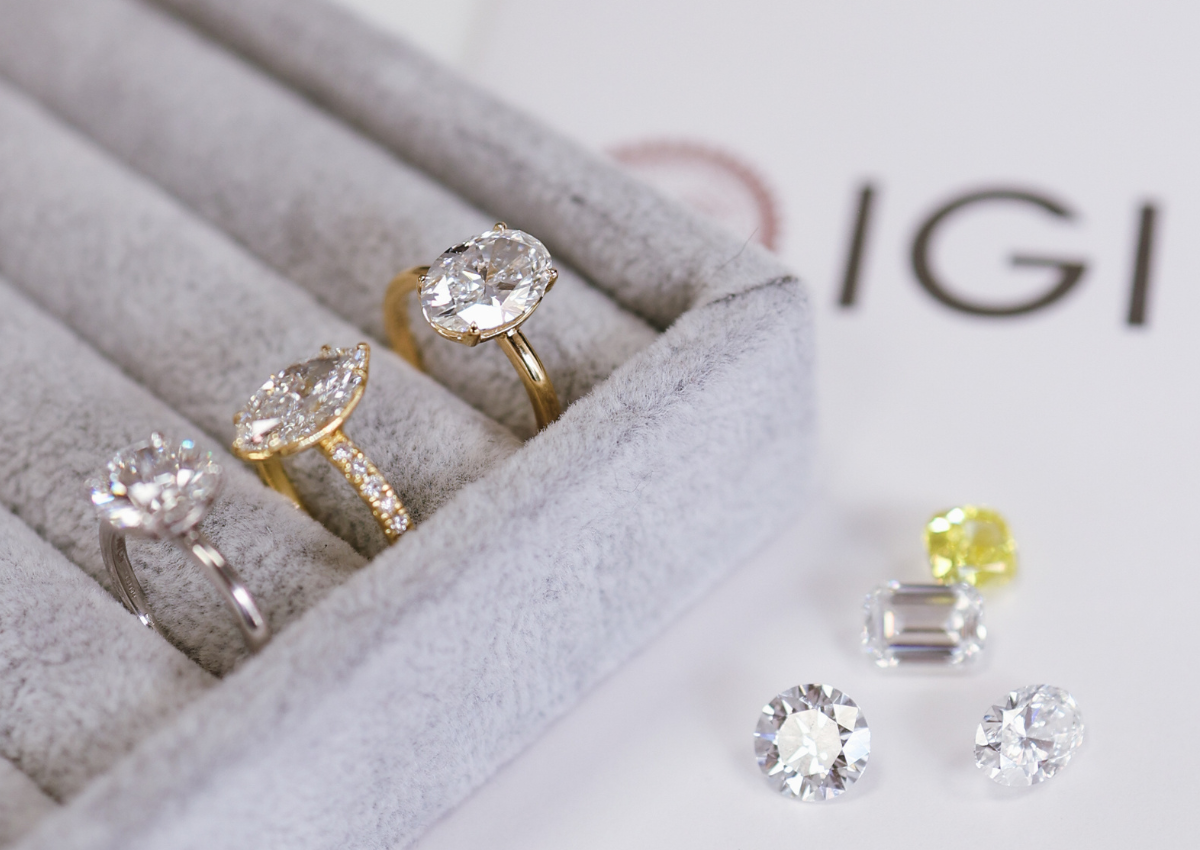
Why should you buy certified diamonds?
The certificate allows you to compare a diamond with others of similar characteristics on the market. This way you can know if the price you pay truly corresponds to the quality of the stone.
Furthermore, it facilitates the verification of the gem and provides detailed information about its characteristics.
How to verify a diamond certificate online?
The main gemological laboratories allow you to verify certificates directly from their websites. You just need to enter the certificate number into the laboratory's database: IGI (International Gemological Institute) or GIA (Gemological Institute of America). The system will then display the complete diamond report, confirming that the certificate is authentic and matches the characteristics of the stone.
The certificate is the only real guarantee that you are acquiring exactly what you are being sold. In the lab-grown diamond market, where technology is constantly advancing and supply is growing, having a certificate from a recognized gemological institute is the difference between a smart purchase and an unnecessary risk.

Certified diamonds at The Bright Club
At The Bright Club, all diamonds come with their corresponding gemological certificate issued by independent laboratories.
This certificate includes all the technical data of the stone and allows you to verify its characteristics at any time.
In addition, many diamonds include a laser inscription with the certificate number, which makes it easy to verify that the certificate matches the stone exactly.
Do engagement rings come with a certificate?
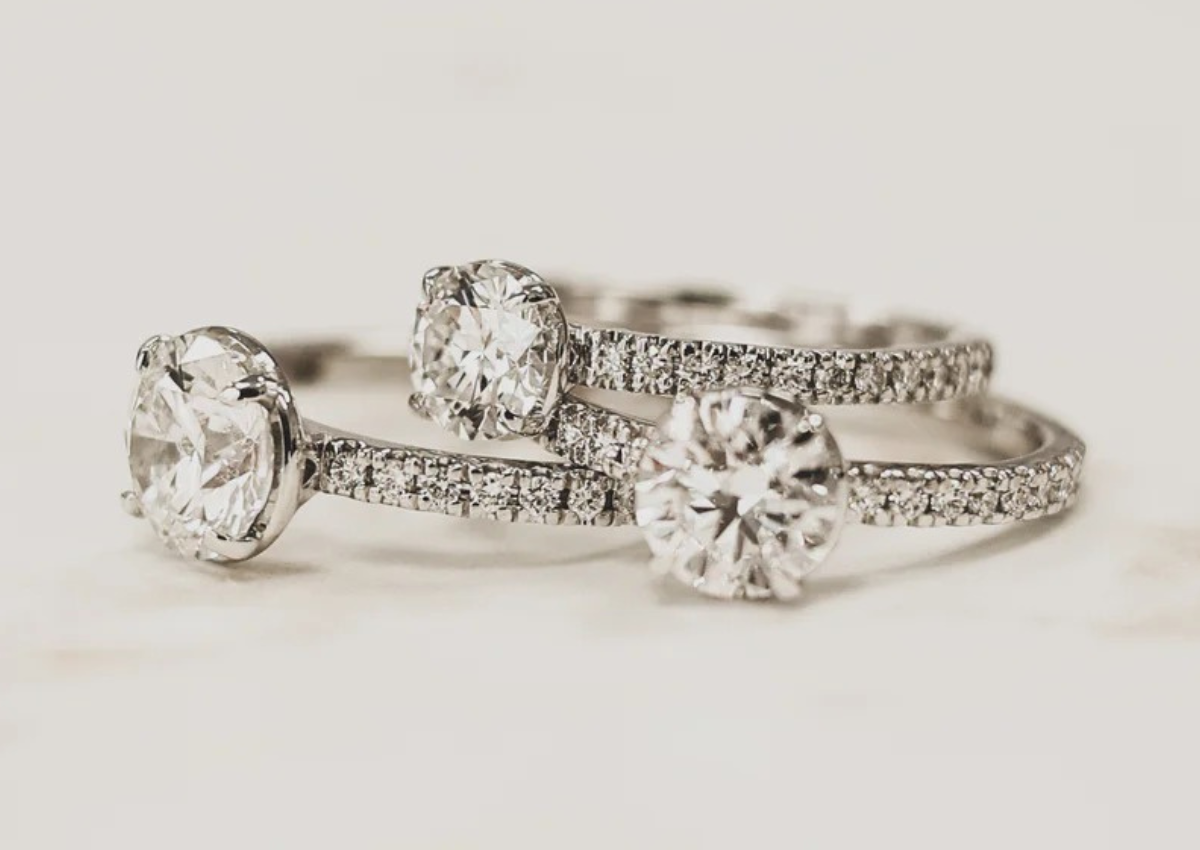
When you buy a diamond engagement ring, the certificate does not correspond to the ring itself, but to the diamond that is part of the piece of jewelry. The document that accompanies the piece is the diamond's gemological certificate, which analyzes and describes the exact characteristics of the stone.
This certificate includes detailed information on aspects such as the carat weight, color, clarity, cut, and proportions of the diamond. Thanks to this data, it is possible to uniquely identify the stone and know its true quality.
In the case of engagement rings with significant diamonds, the diamond is usually certified by independent gemological laboratories such as IGI (International Gemological Institute) or GIA (Gemological Institute of America). These organizations analyze the stone using standardized technical criteria and issue a report that can be verified online using the certificate number.
Therefore, when referring to a diamond ring certificate or an engagement ring certificate, it actually refers to the gemological certificate of the diamond incorporated into the piece of jewelry. This document is the guarantee of authenticity and quality of the stone, regardless of the ring's design or the metal used in the setting.
Frequently asked questions
Yes, absolutely. Lab-grown diamonds are certified by the same gemological laboratories that certify natural diamonds, primarily IGI and GIA. The certificate evaluates the same characteristics (the 4 Cs) with identical rigor.
Many certified diamonds include a microscopic laser inscription on the girdle of the diamond. This number exactly matches the number on the gemological certificate.
Thanks to this inscription, it is possible to verify that the physical diamond corresponds to the certificate issued by the laboratory. This system guarantees the authenticity and traceability of the stone.
Both laboratories are internationally recognized and use rigorous evaluation standards.
IGI is especially common for lab-grown diamonds, while GIA has historically been the benchmark for natural diamonds.
It's very simple. Each certificate includes a unique number that you can enter on the official website of the issuing laboratory (GIA.edu or IGI.org). There you can consult the full report and verify that it matches your diamond.
Additionally, you can look for the laser inscription of the certificate number on the diamond's girdle with a jeweler's loupe.
To verify a certificate's authenticity, you can enter the certificate number into the official database of the gemological laboratory that issued it.
If the certificate is valid, the full report with all of the diamond's characteristics will appear.
Quality lab-grown diamonds should always be accompanied by a certificate issued by an independent gemological laboratory. This document guarantees that the stone has been analyzed and evaluated by experts.
A certified diamond is not necessarily more valuable simply because it has a certificate, but it does have a clearer and more verifiable value in the market. Gemological certification involves a professional analysis carried out by independent laboratories, where key characteristics such as carat weight, color, clarity, and cut are evaluated.
Furthermore, obtaining this certification has a cost and guarantees that the diamond has been examined under international gemological standards.
Therefore, a certified diamond offers greater transparency, traceability, and ease in determining its true value, which is especially important for high-end jewelry or in buying and selling processes.

Any questions?
Our team of experts is here to advise you. Whether online or in our showroom, we will help you find the perfect piece.

