

 Solitaire
 Hello
Hello
 Paved
Paved
 You and I
 Bezel/Setting
 Vintage
 Three diamonds
 Diamond eternity band
 Other Gems
 Round
Round
 Emerald
 Oval
Oval
 Pear
Pear
 Marquess
 Cushion
 Radiant
 18k White Gold
 18K Yellow Gold
 18K Rose Gold
 18k Yellow Gold and White Gold


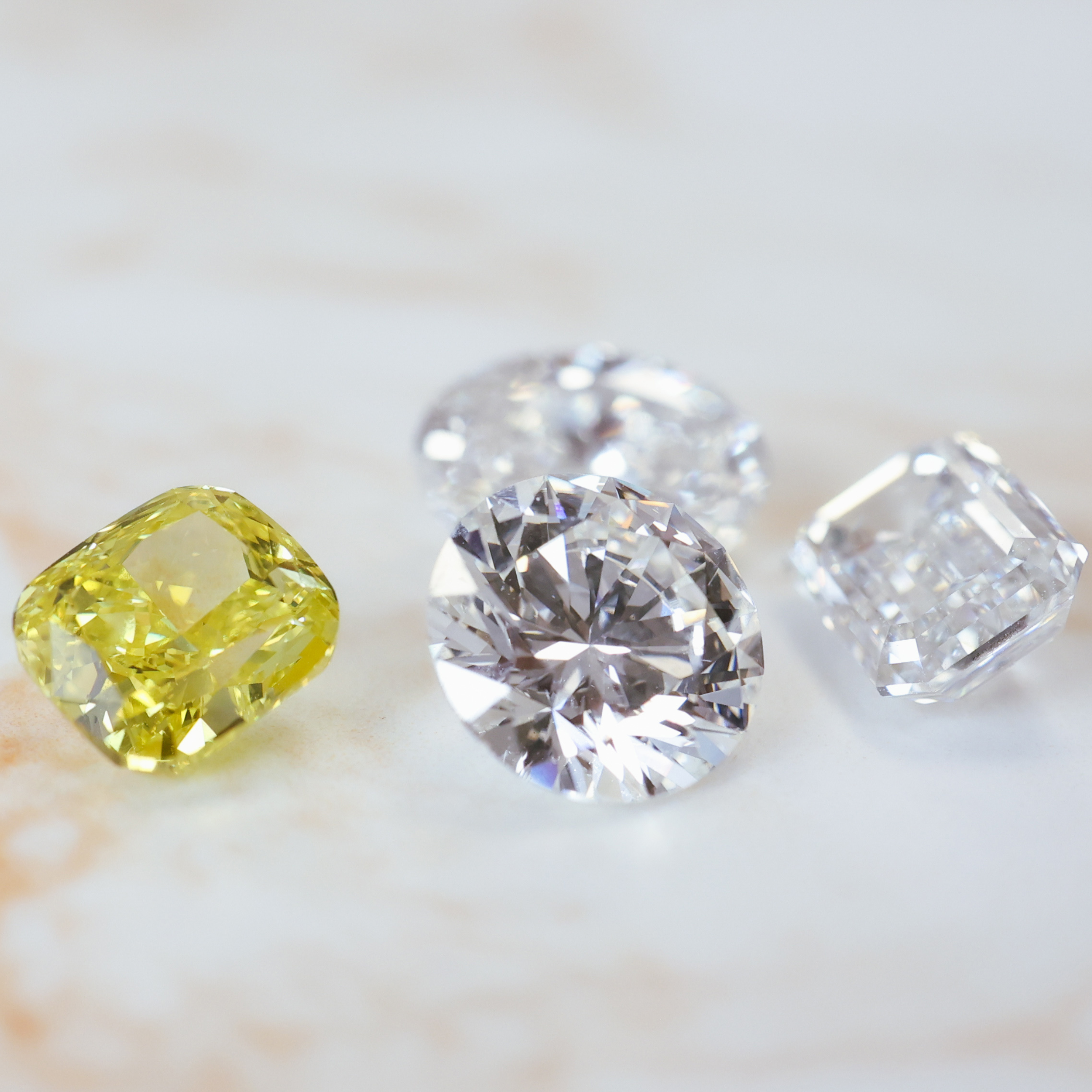

A lab-grown diamond is a real diamond created using technology that reproduces the natural conditions under which diamonds are formed deep within the Earth.
Also known as synthetic diamonds, cultivated diamonds, lab-created diamonds, or lab-grown diamonds, they possess exactly the same physical, chemical, and optical properties as mined diamonds. The only difference between them is their origin.
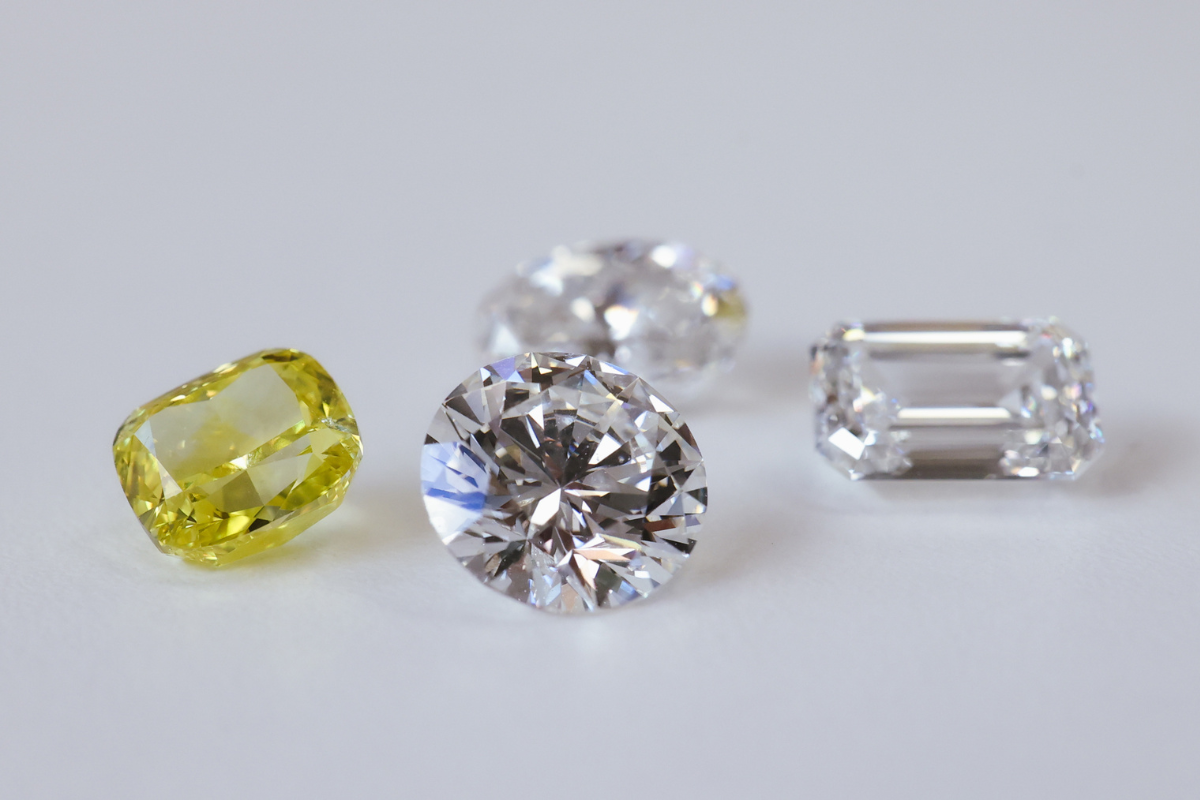
Lab Grown Diamonds: What They Really Are
Lab Grown Diamonds are real diamonds created using technology that replicates the natural conditions for diamond formation. They have the same composition, hardness, and brilliance as natural diamonds, and the only difference is their origin.

What The Bright Club's Lab Grown Diamonds Are Like
The Bright Club's lab grown diamonds stand out for their exceptional quality in terms of clarity, color, and cut perfection. Thanks to the advanced technology used in their creation, they possess exactly the same physical, chemical, and optical properties as mined diamonds: they are, in every sense, real diamonds.
Furthermore, our diamonds are certified by international gemological laboratories such as IGI or GIA, which analyze and verify their quality characteristics under the same standards used for any diamond.
In 2018, the United States Federal Trade Commission (FTC) updated the official definition of "diamond," recognizing that the term applies to both lab-created and earth-extracted diamonds, as long as they share the same composition and crystalline structure.
Lab grown diamonds represent a new era in fine jewelry: the union of innovation, sustainability, and conscious style, for those who wish to enjoy authentic luxury with a real commitment to the planet.

Lab-Grown Diamonds vs. Mined Diamonds
Lab-grown diamonds possess exactly the same properties as mined diamonds: a hardness of 10 on the Mohs scale, the same brilliance, and the ability to refract light identically. Even for expert gemologists, it is practically impossible to distinguish them with the naked eye, requiring specialized equipment to determine their origin.
"They are real diamonds. They have the same optical, chemical, thermal, and physical characteristics."
Matthew Hall, Director, Gemological Institute of America (GIA).
"Man-made diamonds are diamonds."
U.S. Federal Trade Commission, August 2018.
"Mined diamonds are a gift from nature, while man-made diamonds are a gift from human wisdom."
Qiang Lin, President of the Shanghai Diamond Exchange.
The only difference between a lab-grown diamond and a natural one is its origin.
- Natural diamonds: formed over millions of years beneath the Earth's surface.
- Lab-grown diamonds: created in a few weeks by replicating those conditions.
Are they real or imitation diamonds?
Yes, lab-grown diamonds are real diamonds. They should not be confused with materials like cubic zirconia or moissanite, which are imitations.
A lab-grown diamond is composed of pure carbon, just like a natural diamond, which means it has the exact same physical and optical properties.
How Is a Lab-Grown Diamond Created?
During the manufacturing process of a lab-grown diamond, two main methods are used:
HPHT method (High Pressure High Temperature)
This process begins with a small diamond seed placed in a chamber with pure carbon and a metal catalyst. Temperatures of up to 1,500°C and pressures equivalent to 70 times atmospheric pressure are applied, recreating the conditions of the Earth's mantle. The seed grows atom by atom for 6-10 weeks until it forms a complete diamond.
CVD Method (Chemical Vapor Deposition)
In the CVD process, diamond seeds are placed in a vacuum chamber filled with carbon-rich gases such as methane and hydrogen. Microwaves energize these gases, creating a plasma that deposits carbon layer by layer onto the seeds. This more modern method allows for greater control over the diamond's final characteristics. Both processes culminate with traditional cutting and polishing, following the same standards as mined diamonds.
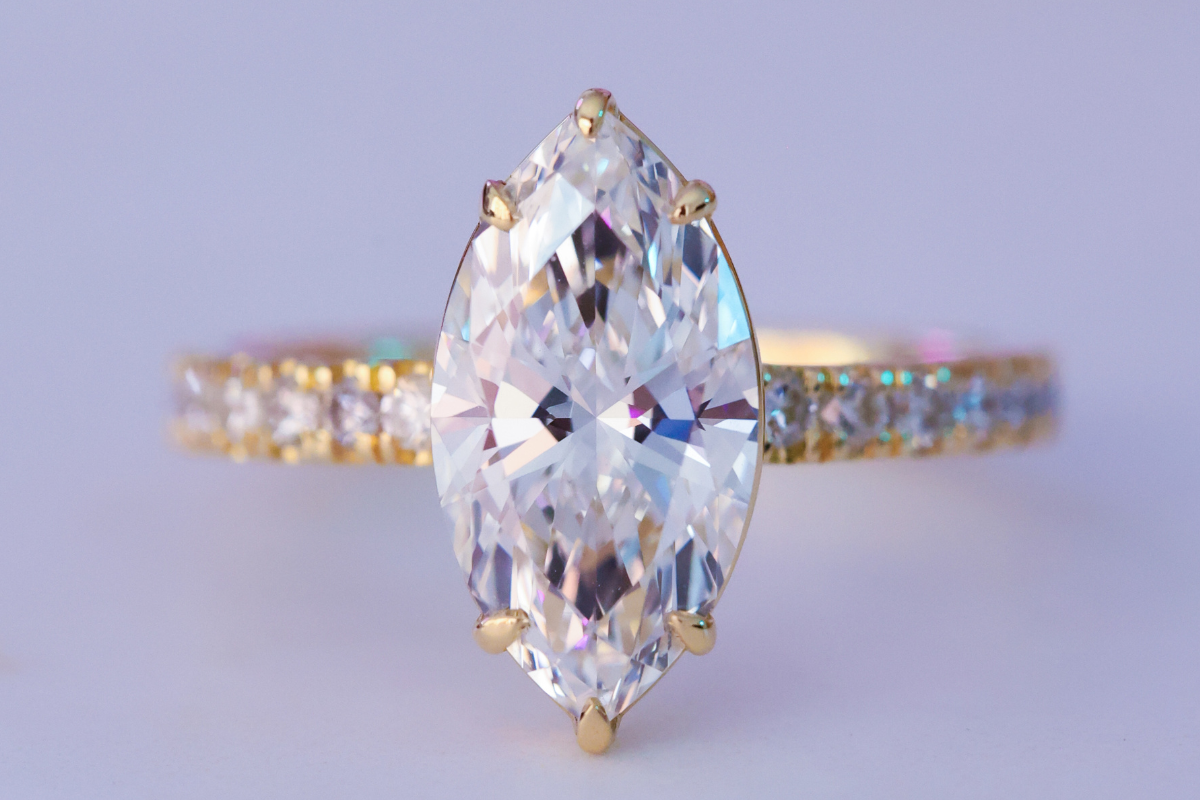
Do mined diamonds and lab-grown diamonds have the same hardness?
The durability of a lab-grown diamond is eternal, exactly the same as that of a mined diamond. Both are real diamonds, with the same crystalline structure of pure carbon, which gives them the maximum hardness of 10 on the Mohs scale.
Just like mined diamonds, lab-grown diamonds do not scratch, discolor, or alter over time. They also do not require special care or specific storage conditions.
In short, a lab-grown diamond has the same beauty, strength, and eternal durability as a diamond extracted from the earth. The only thing that changes is its origin.

How Much Do Lab-Grown Diamonds Cost?
The price of a lab-grown diamond is one of its major attractions, as it can be up to 80% lower than that of a mined diamond.
This difference is not due to lower quality, but rather a more efficient production process, which allows access to larger, higher-quality diamonds and custom designs.

Are lab-grown diamonds certified?
Our lab-grown diamonds always include an official certification issued by recognized gemological institutions such as GIA (Gemological Institute of America), IGI (International Gemological Institute), or HRD. These certifications guarantee their authenticity and precisely detail their characteristics according to the 4Cs: color, clarity, cut, and carat weight.
Each certificate is a guarantee of trust and transparency, ensuring that every diamond meets the same international quality standards as mined diamonds.
The lab-grown diamond certificate clearly specifies its "lab grown" origin and provides a complete gemological analysis. These documents include verifiable numbering and microscopic laser engraving on the diamond's girdle for authentication.It is essential to only purchase diamonds with internationally recognized certification to ensure quality and value.
Advantages of lab-grown diamonds
Lab-grown diamonds have become an increasingly popular choice for several reasons:
1. They maintain the same quality as natural diamonds
2. They stand out for being more affordable
3. There is greater quality control
4. They allow for complete traceability of origin
This allows access to high jewelry pieces with greater flexibility in design and budget.

Ecofriendly
Sustainable and respectful of the environment. Not marked by wars and conflicts.

Best Price
Lab-grown diamonds are up to 80% cheaper than mined diamonds.

Certificates
Our Sustainable Diamonds are I.G.I. certified and laser engraved on the diamond itself.
Every story deserves its own spotlight
Frequently asked questions
Synthetic diamonds are another way to refer to lab-grown diamonds. They are real diamonds created through technology.
A lab-grown diamond is a diamond created in a laboratory from pure carbon, with the same properties as a natural diamond.
It can only be detected with specialized detection equipment.
Visually, they are indistinguishable from mining-grade GPUs. You can also see this on the certificate.
Lab-grown diamonds are pure carbon diamonds identical to mined diamonds, while moissanite is silicon carbide with different optical properties. Moissanite exhibits greater rainbow fire, while diamonds maintain a more subtle and natural sparkle.
Laboratory diamonds are also known as created, cultured, synthetic, or lab-grown diamonds. In English, they are referred to as Lab Grown Diamonds, Lab Created Diamonds, or Man Made Diamonds.
All these terms refer to the same concept: real diamonds, formed entirely of crystallized carbon, with the same chemical, physical, and optical properties as mined diamonds. The only difference between them is their origin.
Lab-grown diamonds have become an increasingly popular choice because they offer the same quality as a natural diamond at a more accessible price.

