

 Solitaire
 Hello
Hello
 Paved
Paved
 You and I
 Bezel/Setting
 Vintage
 Three diamonds
 Diamond eternity band
 Other Gems
 Round
Round
 Emerald
 Oval
Oval
 Pear
Pear
 Marquess
 Cushion
 Radiant
 18k White Gold
 18K Yellow Gold
 18K Rose Gold
 18k Yellow Gold and White Gold


April 22, 2026
For most people, buying an engagement ring is the most significant jewelry purchase of their lives. And also one of the most uninformed. There's a lot of romanticism surrounding that moment, but little clarity on how to approach the financial aspect. Today, we'll tell you everything you need to know to choose the best one in all aspects.
First: Forget the two- or three-month salary rule
You've probably heard this before: an engagement ring should cost the equivalent of two months of your salary. Or three. Or one. The figure changes depending on who tells you.
What doesn't change is the origin of that rule: an advertising campaign by De Beers launched in the 1930s to sell more diamonds. It has no economic or sentimental basis. It's pure marketing.
Blindly following that rule can lead you to two equally bad places: spending more than you can afford or feeling guilty for not reaching that figure when in reality you are choosing a beautiful ring within your means.
The budget for an engagement ring should be built from the inside out, from your real situation, not from an invented rule. Here's how to do it.
How to calculate your real budget in four steps
Step 1: Set your financial ceiling
Before looking at rings, define how much you can allocate to this purchase without compromising your financial stability. Keep in mind that the engagement ring is just the beginning of a series of significant expenses: the wedding, the honeymoon, the start of a life together.
A good way to think about this: how much could you spend on this purchase without needing external financing, or with financing that you can comfortably repay? That's your starting figure.
Step 2: Consider associated costs that are often forgotten
The price of the ring is not the only cost. Before setting your total budget, also consider potential resizing after the proposal, ring insurance, long-term maintenance such as cleaning or re-rhodium plating of white gold, and shipping costs if you buy online, although many jewelers include them.
Step 3: Divide the budget between stone and setting
This is the point that makes the biggest difference when making smart decisions. The final price of an engagement ring depends on two major blocks: the center stone and the setting. Understanding the weight of each allows you to prioritize well.
In a diamond engagement ring, the center stone has one cost and the setting, meaning the metal, design, and craftsmanship, has another. Knowing this helps you decide where it makes more sense to invest based on what your partner values.
Step 4: Decide what matters most to your partner
Before entering any jewelry store or opening any website, ask yourself a key question: what does your partner value most in a ring? The visual size of the stone? The quality of the sparkle? The design of the setting? A specific metal? The sustainability of the origin of the materials?
The answer to that question should guide how you allocate your budget. If size matters, there are strategies to maximize it without skyrocketing the price. If sparkle is what matters, the quality of the diamond's cut is where you should invest. If design exclusivity matters, the budget will go more towards the setting.
Factors that determine the price of an engagement ring
Knowing what drives the price allows you to make smarter decisions. These are the elements that have the most influence.
The diamond: the 4Cs
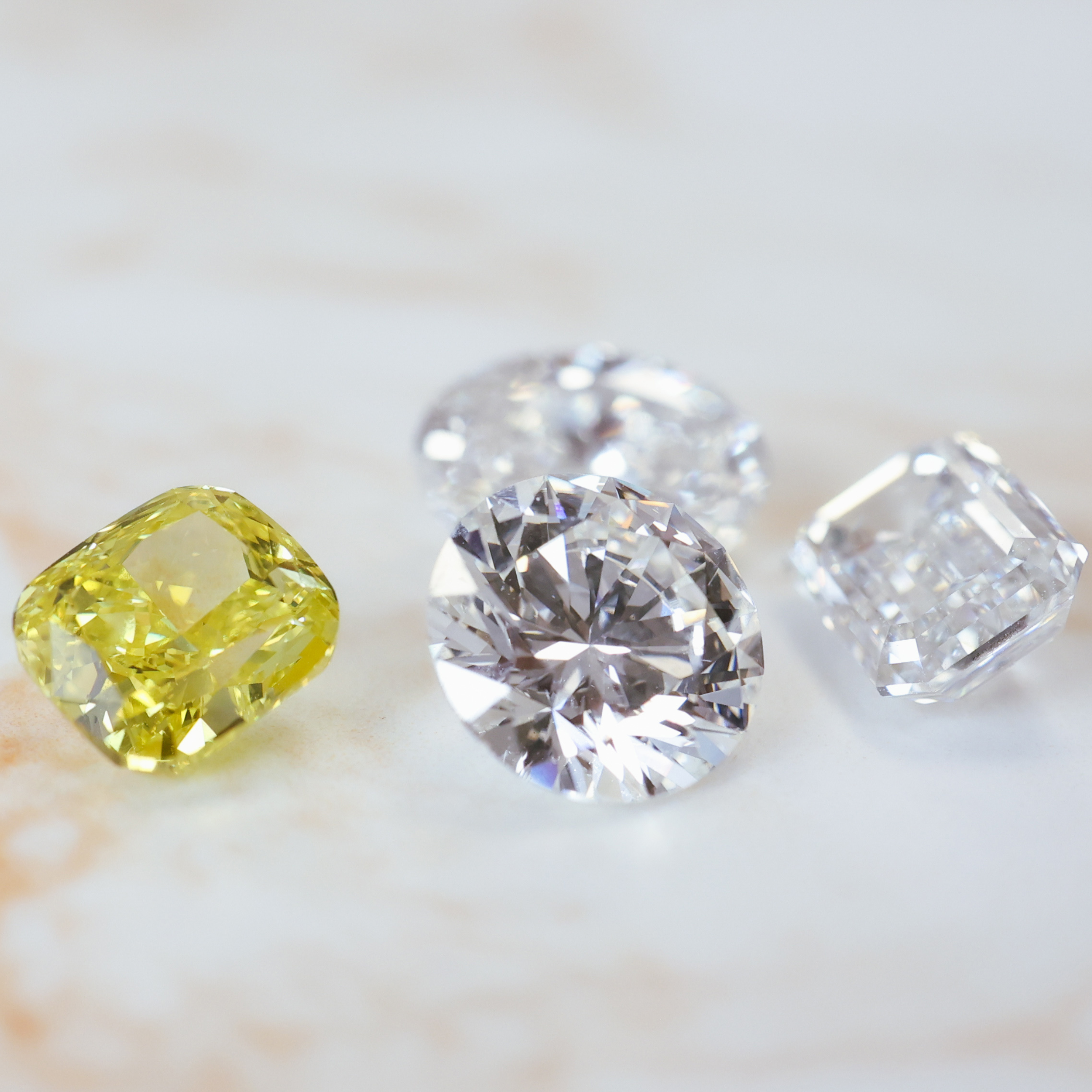
The price of a diamond is determined by four characteristics known as the 4Cs: cut, color, clarity, and carat.
The cut is the most important characteristic and the one that most influences the diamond's brilliance. A diamond with an excellent cut can sparkle more than one with a higher carat weight but a poorer cut. If you have to prioritize just one C, prioritize the cut.
The color is measured on a scale ranging from D, completely colorless and the most valued, to progressively more yellowish tones.
The clarity refers to the internal imperfections of the diamond. There are clarity grades that have inclusions completely invisible to the naked eye, which represent significant savings compared to the purest grades without affecting the visual result.
The carats determine the weight and, to a large extent, the visual size of the stone.
The metal of the setting
The metal influences both the price and the aesthetics and durability of the ring. Platinum does not wear out over time, does not need rhodium plating, and maintains its color permanently. 18-karat white gold is the most popular option in Spain, with an appearance very similar to platinum, although it needs re-rhodium plating every few years. Yellow gold and rose gold have been trending in recent years, especially for warmer or vintage styles.
Design and craftsmanship
A classic solitaire ring with a standard setting will have a lower manufacturing cost than a design with side pavé, multiple stones, complex settings, or custom pieces. If the budget is tight, opting for a clean and well-executed design is always a good decision: elegance often lies in simplicity.
The variable that changes the equation the most: the lab-grown diamond
If there's one factor that has radically transformed the engagement ring market in recent years, it's the consolidation of lab-grown diamonds as a real and accessible alternative to natural diamonds.
A lab-grown diamond has exactly the same chemical composition, the same crystalline structure, the same hardness, and the same brilliance as a diamond extracted from the earth. It is not an imitation or a substitute: it is a diamond, certified by the same international gemological laboratories, such as GIA or IGI, and cut to the same precision standards.
The difference is in the price. A lab-grown diamond with the same characteristics as a natural one costs significantly less, which has a direct and very specific impact on what you can get with your budget: the same money provides access to a larger and better quality certified stone, with no difference in visual result or ring durability.
How to stretch your budget without sacrificing quality
Beyond choosing a lab-grown diamond, there are other specific decisions that allow you to get more out of your budget without compromising the visual result.
-
Prioritize cut over carat weight. A diamond with an excellent cut sparkles more than a larger, but poorly cut one. Cut is the C that has the most impact on the final look of the ring, and it's not always the most expensive.
-
Don't necessarily go for the highest color grades. The difference between the highest and intermediate grades is practically imperceptible to the naked eye, especially when the diamond is set. However, the price difference can be significant.
-
Opt for medium-high clarities. From VVS2 upwards, inclusions are practically imperceptible even under magnification, ensuring a visually perfect diamond without compromising quality or aesthetics.
-
Avoid exact and round carats. A diamond just under a "round" carat weight can be visually identical to the next and cost significantly less. Buying at these intermediate points is one of the most effective tricks in the industry.
-
Consider cuts other than the round brilliant. Oval, pear, or marquise cuts are usually priced lower than a round brilliant cut of the same carat weight because they generate less waste in the cutting process. Additionally, their elongated shape makes the stone appear visually larger.
-
Invest in the setting only what really matters. A simple, well-executed setting can be more elegant than an ornate design. You don't need to spend more on the setting for the ring to be more beautiful.
Common mistakes when defining the engagement ring budget
Focusing on carat weight as the sole criterion. Carat weight determines size, but not the quality of brilliance. A large diamond with a poor cut may sparkle less than a smaller one with an excellent cut.
Not considering the final design of the ring. The same diamond can look very different depending on the setting. A halo setting surrounding the diamond can also make it appear larger.
Buying in a hurry. An engagement ring is not an impulsive purchase. Take the necessary time to compare and inform yourself.
Not asking for the gemological certificate. Every diamond should come with a certificate from a recognized laboratory, such as GIA or IGI. Without a certificate, you have no way to verify the characteristics being sold to you.
Ignoring your partner's preferences. No matter how beautiful the ring, if it doesn't match the style of the person who will wear it every day, the result won't be ideal. If the proposal is a surprise, discreetly research their tastes before buying.
Engagement Ring Budget FAQs
The range is very wide and depends on each couple's preferences and financial situation. The most important thing is not to reach a specific figure, but to choose within your real possibilities without compromising your financial stability.
If the jeweler offers interest-free financing, it can be a reasonable option. The important thing is that the installments do not compromise other important expenses such as the wedding or shared savings. Going into high-interest debt to buy a ring is not a sensible financial decision.
No. A diamond's brilliance and beauty depend mainly on the quality of its cut, not its size. A smaller diamond with an excellent cut can be much more visually striking than a larger one with a mediocre cut.
No. A lab-grown diamond is chemically identical to a natural one. The only difference is its origin. They are certified by the same laboratories and have the same brilliance, hardness, and appearance.
Allow enough time. It is recommended to start your search at least two months before the proposed date. Custom rings or those with specific stones may require more time.
Yes, as long as the seller offers a diamond gemological certificate, a clear return policy, and a warranty on the jewelry. Buying online allows for a calmer comparison and access to a much wider selection than in any physical jewelry store.
It's not mandatory, but diamonds are the most popular choice for engagement rings due to their hardness, brilliance, and symbolism. Other popular options include sapphire, ruby, or emerald.

Gabriela Melguizo
Founding Partner & Brand Director
Learn more
How to choose the perfect engagement ring without getting lost in the process
Choosing the perfect ring doesn't have to be complicated. The important thing is to find a piece that reflects the couple's style and story. A good engagement ring will be a jewel that will last a ...
Read more
How to Determine Your Ring Size: The Ultimate Guide with All the Methods
Quick answer: To find your ring size, measure the circumference of your finger with a tape measure or a strip of paper and a ruler, or measure the inside diameter of a ring that already fits you we...
Read more
