
 Solitaire
 Hello
Hello
 Paved
Paved
 You and I
 Bezel/Setting
 Vintage
 Three diamonds
 Diamond eternity band
 Other Gems
 Round
Round
 Emerald
 Oval
Oval
 Pear
Pear
 Marquess
 Cushion
 Radiant
 18k White Gold
 18K Yellow Gold
 18K Rose Gold
 18k Yellow Gold and White Gold


July 10, 2026
There are jewels that captivate at first sight, but few generate as much curiosity and as many questions as lab-grown diamonds. If you've made it this far, you've probably already heard about them and want to understand exactly what they are before making a decision. You're in the right place.
What are lab-grown diamonds and why aren't they "fake"?
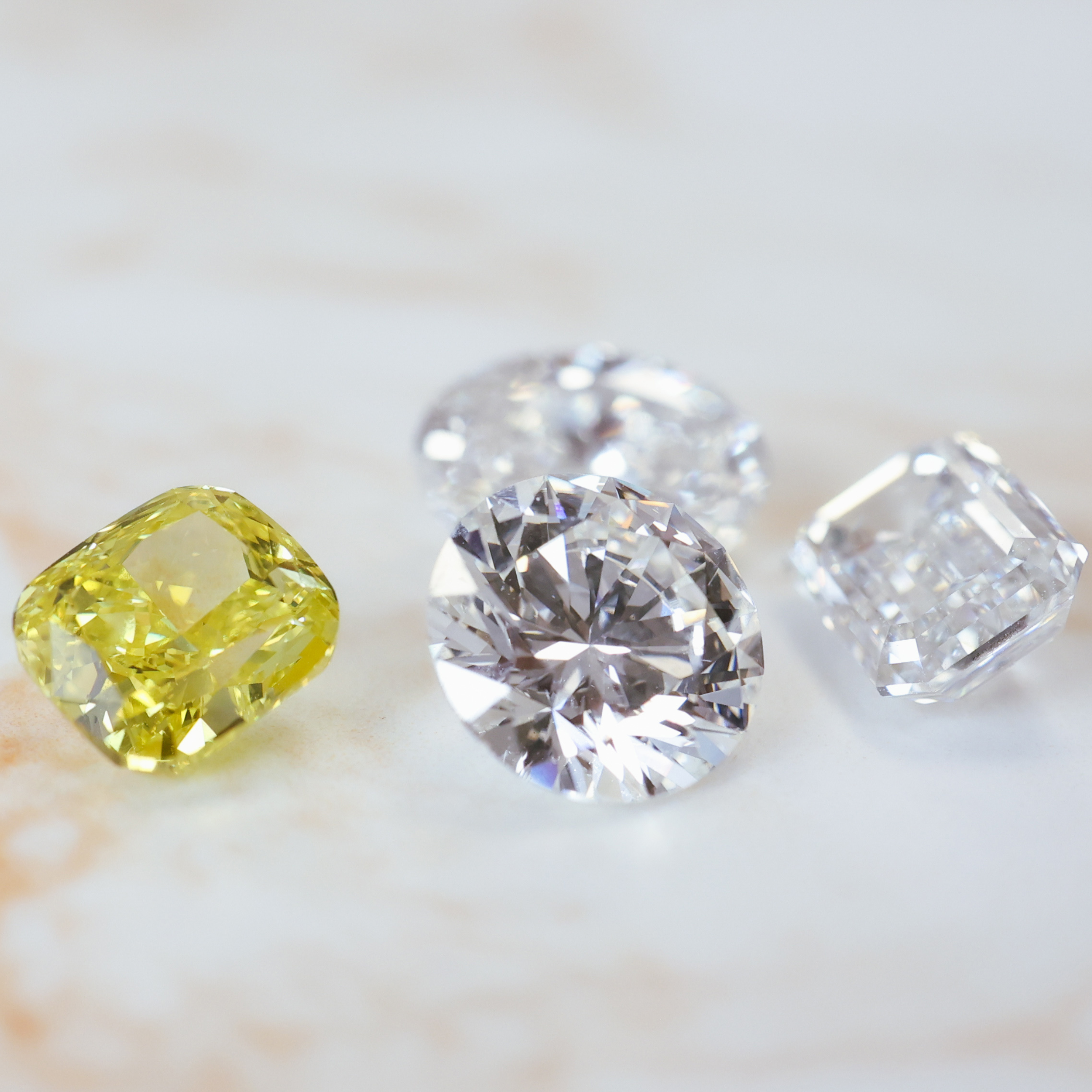
A lab-grown diamond is, for all physical, chemical, and optical purposes, a real diamond. It is not an imitation, it is not glass, and it is not cubic zirconia. It is pure carbon crystallized in the same cubic structure that defines natural diamonds, with the same hardness (10 on the Mohs scale), the same refractive index, and the same characteristic brilliance that has made this stone the eternal symbol of luxury.
The fundamental difference from an earth-mined diamond is not in its composition or appearance: it is in its origin. While natural diamonds form over billions of years under extreme conditions deep within the Earth's crust, lab-grown diamonds replicate that process in a controlled manner in specialized facilities, compressing that cycle into a matter of weeks or months.
This nuance is key. Certified gemologists cannot distinguish a lab-grown diamond from a natural one with the naked eye, or even with conventional tools. Only very specific spectroscopic analysis equipment can detect differences in growth traces. To the human eye, to the touch, and for any standard jewelry test, they are exactly the same.

Jewelry with lab-grown diamonds
The two methods of creating lab-grown diamonds
There are two main technologies for creating lab-grown diamonds. Both produce authentic and certifiable stones, although each has its technical peculiarities.
High Pressure High Temperature (HPHT)
The HPHT (High Pressure High Temperature) method is the older of the two and directly replicates the conditions of the Earth's mantle. It starts with a natural or synthetic diamond seed which is subjected to pressures of between 5 and 6 gigapascals and temperatures exceeding 1,400 degrees Celsius. In this extreme environment, the carbon surrounding the seed crystallizes layer by layer, forming a diamond.
This process is tremendously efficient for producing diamonds with a very defined cubic or octahedral shape. HPHT diamonds tend to have very specific colors, and in fact, this method is also used to improve the color of existing diamonds. Today, it is one of the most widely used methods in the industry and produces very high-quality stones that meet all international gemological standards.
Chemical Vapor Deposition (CVD)
The CVD (Chemical Vapor Deposition) method is more recent and, in many ways, more sophisticated. Instead of simulating the pressure deep within the Earth, it works with a vacuum chamber into which a mixture of carbon-rich gases, typically methane, is introduced at temperatures between 700 and 1,200 degrees. A microwave or radiofrequency plasma ionizes these gases, and the carbon deposits, atom by atom, onto a diamond seed.
CVD growth is slower, but it offers extraordinary control over the purity and characteristics of the stone. It allows for the creation of Type IIA diamonds, which are the purest chemically and the most valued in gemology. It is also the preferred method for producing high-quality colorless diamonds intended for fine jewelry.
| Characteristic | HPHT Method | CVD Method |
|---|---|---|
| Approximate Temperature | +1,400 °C | 700 - 1,200 °C |
| Pressure Used | Very High (5-6 GPa) | Low (Vacuum) |
| Growth Rate | Fast | Slower and More Controlled |
| Common Colors | Colorless, Yellow, Blue | Mainly Colorless |
| Purity Control | High | Very High |
| Type IIA Purity | Less Frequent | More Frequent |
Knowing your diamond's creation method isn't essential to enjoying it, but it is relevant information if you seek maximum transparency and want to know exactly what you have in your hands.
How lab-grown diamonds differ from natural diamonds
One of the most frequent questions is whether there are real differences between a lab-grown diamond and a natural one beyond their origin. The honest answer is that the differences are minimal and, in most cases, favor the lab-grown diamond.
From a gemological quality perspective, lab-grown diamonds are certified exactly like natural ones: following the four "C"s (cut, color, clarity, and carat). A lab-grown diamond can have a D-IF classification (colorless and maximum purity) just like the best natural diamond in the world. In fact, because they are produced under controlled conditions, it is easier to obtain stones with fewer inclusions and more uniform colors.
From a price perspective, the difference is substantial. A lab-grown diamond equivalent to a natural one can cost more than 80 percent less, depending on size and quality. This is not because it is inferior, but because the production process is more efficient and does not involve the logistical, human, and extractive costs of mining. For the buyer, this means access to larger or higher quality stones with the same budget.
In terms of environmental impact, lab-grown diamonds completely eliminate the need for open-pit mining, which generates a significant ecological footprint. This is one of the most powerful arguments driving their adoption among conscious consumers who don't want to give up luxury, but do want to avoid the negative consequences that their acquisition has historically entailed.
How a lab-grown diamond is certified
A fundamental aspect that distinguishes quality lab-grown diamonds is their gemological certification. The most recognized laboratories in the world, such as the GIA (Gemological Institute of America) or the IGI (International Gemological Institute), issue specific certificates for lab-grown diamonds that detail all their characteristics: weight, cut, color, clarity, proportions, and creation method.
Buying a certified diamond is essential, regardless of whether it is lab-grown or natural. The certificate is the objective and impartial guarantee that the stone exactly meets the specifications communicated to you. At The Bright Club, we work exclusively with diamonds certified by top-tier laboratories because we believe that transparency is not an extra, it is the foundation of any trusting relationship with the customer.
If you want to learn more about lab-grown diamonds, on this page, we tell you much more about lab-grown diamonds .
Why lab-grown diamonds are transforming jewelry
The luxury jewelry sector does not change easily. For centuries, natural diamonds have been synonymous with commitment, eternity, and exclusivity. But the emergence of lab-grown diamonds is redefining these concepts without eliminating them.
What is happening is a paradigm shift: value is no longer tied exclusively to geological scarcity, but also to the quality of the stone, the design of the jewel, the story it represents, and the values it embodies. An increasingly informed consumer understands that they can have an absolutely real diamond, larger, with a better gemological classification, and with a reduced environmental impact, without sacrificing any of the qualities that make this stone special.
Fine jewelry designers, independent jewelers, and specialized platforms have responded to this demand with increasingly sophisticated proposals. Lab-grown diamonds are no longer just an economic alternative: they are a conscious and aesthetic choice that reflects the values of a new generation of buyers who demand to know where their luxury items come from and what consequences they have in the world.

What you should know before buying lab-grown diamond jewelry
Before taking the plunge and buying lab-grown diamond jewelry , there are some practical aspects that should be clear to make the best possible decision.
- Define your priority among the four C's. Cut is the factor that most influences a diamond's brilliance, regardless of its size. If you have to balance your budget, never sacrifice the cut.
- Always ask for the gemological certificate. A diamond without a certificate has no verifiable guarantee. GIA and IGI are the two major references in the industry.
- Know the metal of the setting. 18k white gold and platinum are the metals that best enhance the brilliance of a colorless diamond. Yellow or rose gold provides a different and warmer contrast.
- Compare equivalent carats. With the same budget you would allocate to a 0.5-carat natural diamond, you can access a 3-carat or larger lab-grown diamond. Before deciding, explore what real options are available to you.
- Consider the purpose of the jewelry. For an engagement ring , an earring , or a pendant for daily wear, the criteria may be different. Think about the lifestyle of the person who will be wearing it.
The most common myths about lab-grown diamonds
Despite all the available knowledge, some misunderstandings persist that are worth directly dispelling.
"A lab-grown diamond will lose its value." It's true that, like standard-sized natural diamonds, lab-grown diamonds are not a financial investment in the strict sense. But neither are most jewels that are bought. Their value lies in what they represent, not in their resale.
"They are only for those who cannot afford a natural one." This perception is completely outdated. Many buyers with unlimited budgets consciously choose a lab-grown diamond for ethical and aesthetic reasons, not for economy.
"They are not as brilliant." A diamond's brilliance depends on its cut, not its origin. A lab-grown diamond with an excellent cut will shine exactly the same—or more—than a natural diamond with a mediocre cut.
A lab-grown diamond is not a substitute. It is a different, equally legitimate choice, that responds to the values and priorities of the wearer.
The Bright Club's proposal
At The Bright Club we were born with a clear mission: to democratize access to real diamonds without compromising on quality or transparency. Every diamond in our collection is certified, documented, and carefully selected so you know exactly what you're wearing.
If you've made it this far, you already have a solid foundation for making an informed decision. The next step is to discover the available options and find the stone and jewelry that speak to who you are and what you want to represent. We invite you to discover our selection and see for yourself why more and more people are choosing lab-grown diamonds without a second thought.

Gabriela Melguizo
Founding Partner & Brand Director
Learn more
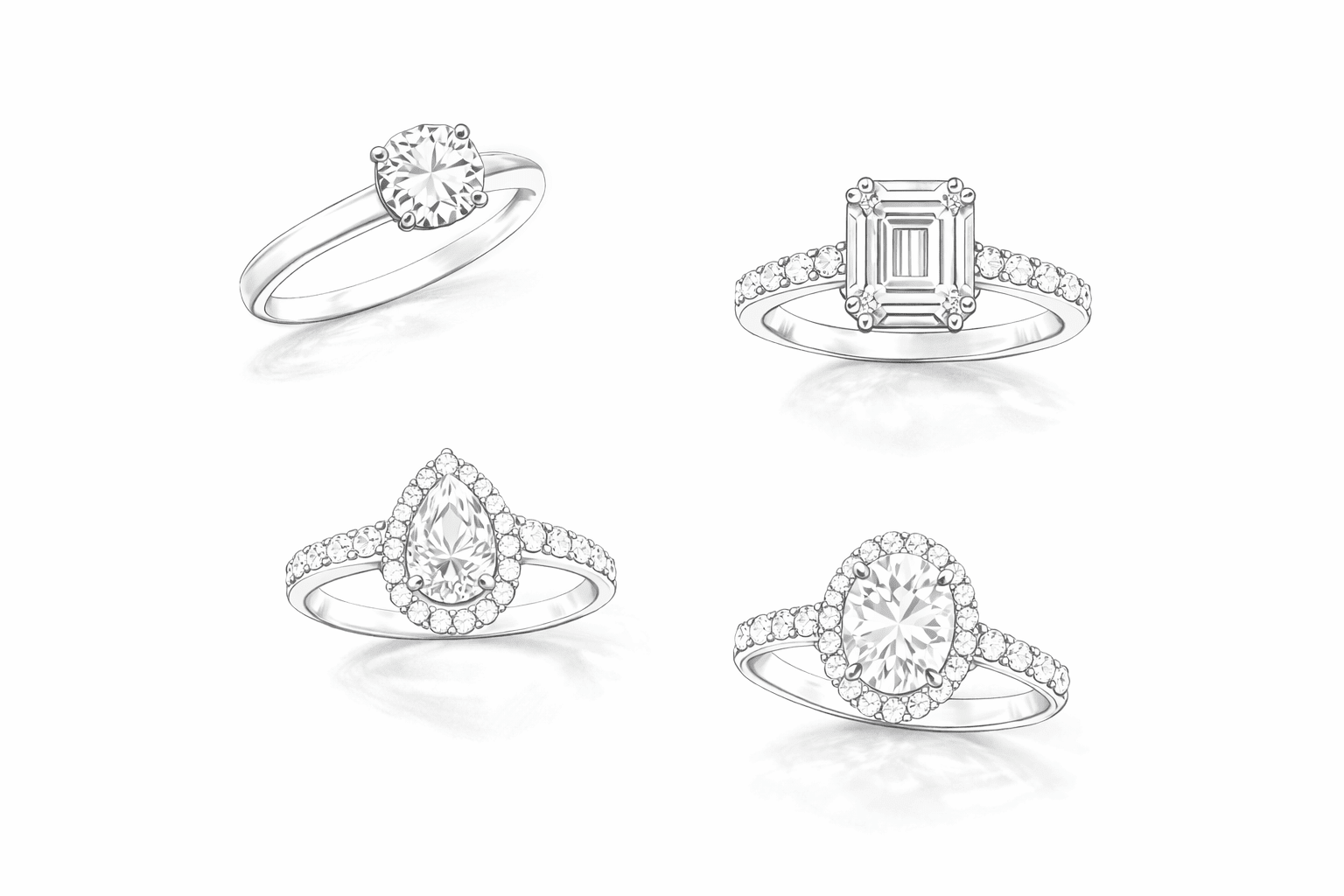
Most popular diamond shapes for engagement rings
There is no perfect diamond shape. The choice depends on personal style, the ring design, and the meaning the couple wants to give it.
Read more
