

 Solitaire
 Hello
Hello
 Paved
Paved
 You and I
 Bezel/Setting
 Vintage
 Three diamonds
 Diamond eternity band
 Other Gems
 Round
Round
 Emerald
 Oval
Oval
 Pear
Pear
 Marquess
 Cushion
 Radiant
 18k White Gold
 18K Yellow Gold
 18K Rose Gold
 18k Yellow Gold and White Gold


April 22, 2026
Choosing a diamond is one of the most personal decisions one can make. Yet, most people approach this moment without realizing that the first thing that defines a diamond, even before its color, clarity, or carat weight, is its shape. The shape of a diamond determines how it interacts with light, what sensation it conveys on the hand, and ultimately, what story it tells about its wearer.
In this guide, you will find everything you need to know about diamond shapes, their technical and visual characteristics, and the details that make all the difference when choosing yours.
Why the Shape of a Diamond Changes Everything
When we talk about diamond shape, we are not referring to the cut in the technical sense, although both concepts are related. Shape refers to the outer outline of the stone: whether it is round, elongated, square, pointed, or curved. Cut, on the other hand, describes how the facets have been cut and polished to optimize the stone's brilliance and fire.
Understanding this distinction is important because the same shape can be executed with different cuts, and each combination produces very different visual results. A round diamond can sparkle differently depending on how its facets have been cut. But the basic shape already dictates, from the outset, the overall optical effect, the perception of size, and the character of the jewelry.
Moreover, the shape of diamonds has a direct impact on price. The most in-demand shapes tend to concentrate the cost because they also concentrate the waste of raw material during the cutting process. Knowing this factor allows you to make smarter decisions without sacrificing the stone you truly desire.
The Main Diamond Shapes with Names and Characteristics
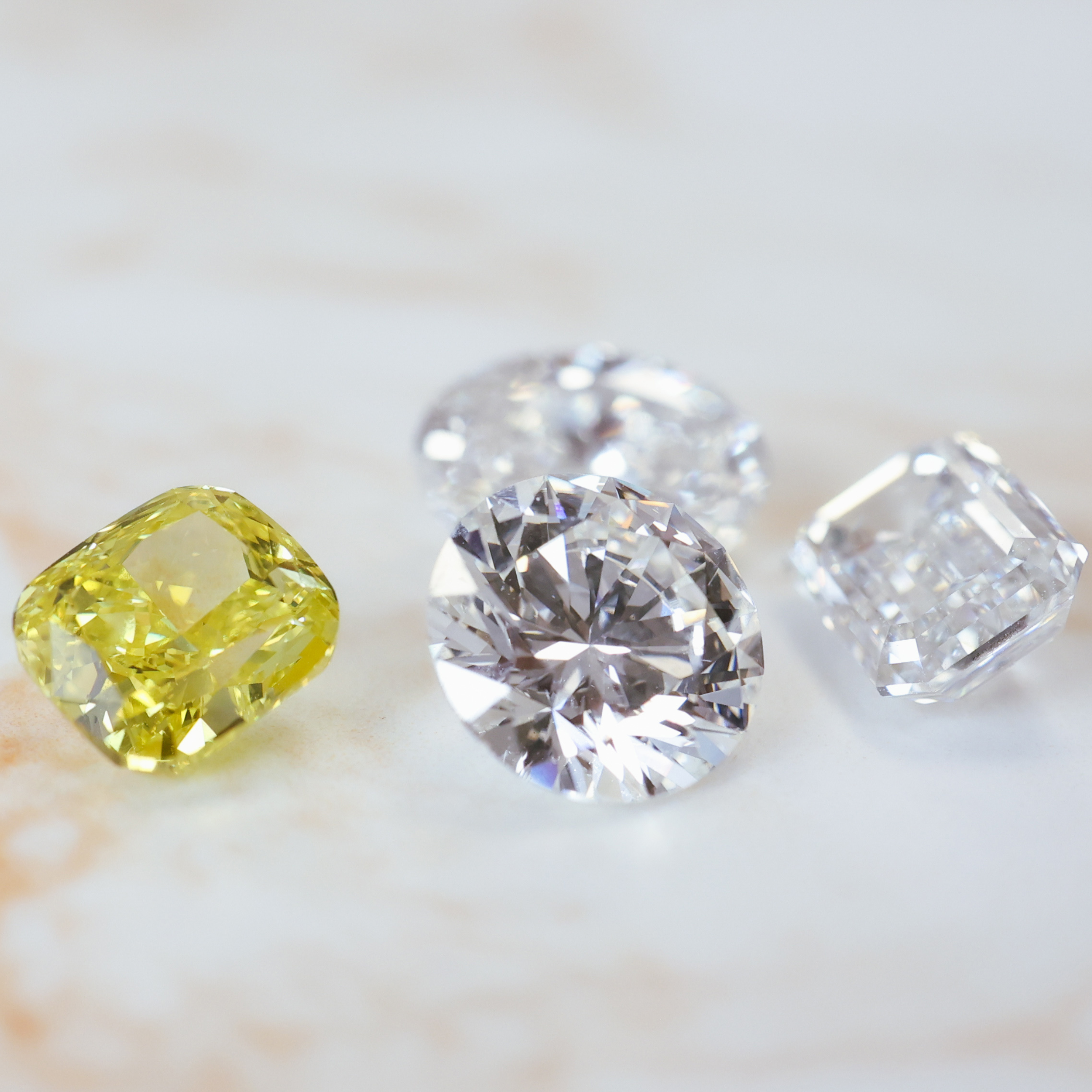
There are more than a dozen recognized shapes in the industry, though some clearly dominate the market. Below you will find a detailed description of each, accompanied by a comparative table so you can quickly cross-reference the most relevant variables.
| Diamond Shape | Visual Profile | Brilliance | Perceived Size | Ideal for |
|---|---|---|---|---|
| Round Brilliant | Circular | Maximum | Standard | Classic engagement rings |
| Oval | Elongated elliptical | Very High | Large (elongating effect) | Solitaires and engagement rings |
| Princess | Square with sharp angles | High | Compact | Modern and minimalist settings |
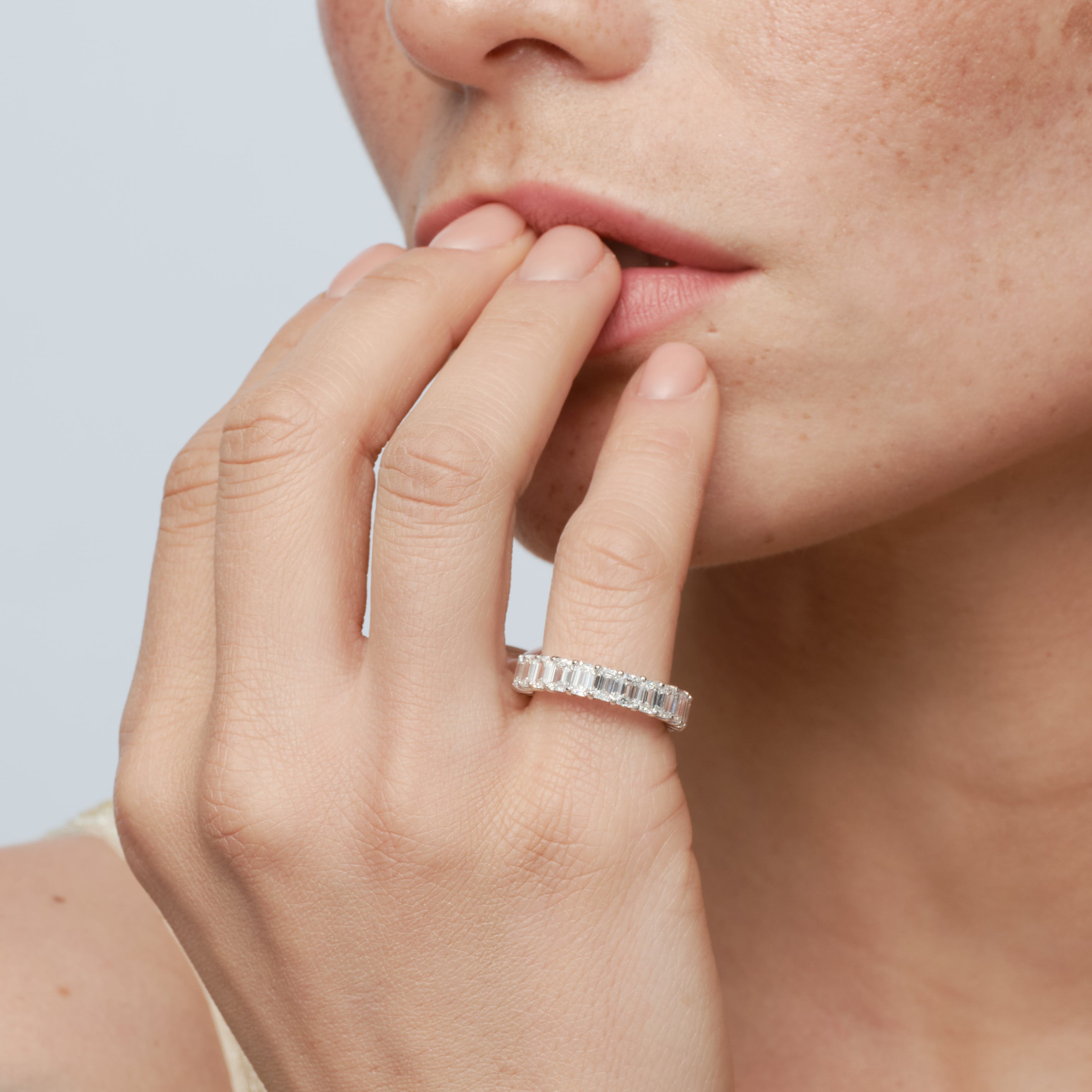
| Emerald | Stepped rectangular | Moderate | Very large visual | Cocktail rings and luxury pieces |
| Cushion | Square with rounded corners | High | Standard-large | Vintage and romantic rings |
| Pear | Asymmetrical teardrop | High | Large (elongating effect) | Pendants and rings for slender fingers |
| Marquise | Elliptical with pointed ends | High | Very large visual | Rings that lengthen the hand |
| Heart | Heart shape | Moderate-high | Compact | Symbolic gift jewelry |
| Radiant | Rectangular with brilliant facets | Very High | Large | Modern rings with great fire |
| Asscher | Stepped square | Moderate | Compact | Art Deco and vintage aesthetic |
| Trillion | Triangular | High | Large visual | Side stones or unique pieces |
This table gives you a quick overview, but each shape deserves a deeper look. Price, choice of setting, and personal style decisively affect the final decision.
Round Brilliant Diamond, the Industry Standard
The round diamond brilliant is, by far, the best-selling shape in the world. And it has solid reasons for being so. Its circular geometry, combined with its 57 or 58 facets (depending on whether the culet or bottom tip is included), is mathematically designed to maximize the internal reflection of light. The result is that characteristic sparkle that virtually everyone mentally associates with a diamond.
From a technical standpoint, the round brilliant concentrates the fire, brilliance, and shimmering dispersion of color more efficiently than any other shape. This means that, for equal carat weight, a round diamond will appear livelier and more luminous than most alternatives. However, it is also the shape that generates the most waste during the cutting process, which translates into a higher price per carat compared to other shapes of equal weight.
If you are looking for a timeless piece of jewelry, with unparalleled brilliance and that needs no justification in any context or style, the round brilliant is the safe choice. Not because it's conventional, but because its design has been perfected over decades to get the most out of each stone.

Elongated Diamond Shapes to Lengthen the Hand
There are several diamond shapes whose elongated design has a particularly interesting visual effect on the fingers: they make them appear longer and more slender. The three most representative are the oval, the pear, and the marquise.
The oval diamond is perhaps the most elegant of the three. It shares the same facets as the round brilliant, but with an elliptical outline that expands the visible surface of the stone. This gives it a larger appearance than its actual weight suggests, and its bilateral symmetry makes it very versatile in different types of settings. It is one of the shapes that has gained the most prominence in recent years among those looking for something different from the round without straying from classic elegance.
The pear combines the point of the marquise with the curve of the round in an asymmetrical shape reminiscent of a water drop. Its versatility is remarkable: it can be used in both pendants and rings, and depending on the orientation, with the point towards the finger or towards the nail, it offers completely different visual interpretations. The marquise , for its part, is the most dramatic of the group, with its two sharp points and a central curve that maximizes the elongating effect on the hand.
*The Bright Club Tip: In elongated shapes like the pear or marquise, pay attention to the phenomenon known as the "bow-tie effect." This is a dark, bow-tie-shaped shadow that can appear in the center of the stone if the cut is not precise. A well-cut diamond minimizes or completely eliminates it.
Square and Rectangular Shapes with Their Own Personality
Square or rectangular diamond shapes have an architectural and modern presence that clearly distinguishes them from the previous group. Within this category, four shapes stand out with their own names and characteristics.
The princess is the most brilliant of the square shapes. Its sharp corners and fan-shaped facet pattern generate very intense flashes and a contemporary look that makes it the second most popular shape on the market after the round. It is ideal for minimalist settings and for those looking for a square diamond without sacrificing explosive brilliance.
The emerald and Asscher belong to the group of stepped cuts, where the facets are long and parallel instead of triangular or fan-shaped. This reduces traditional brilliance but creates a very sophisticated "hall of mirrors" effect: light enters and reflects more slowly and deeply. These shapes require greater clarity in the stone because their large facets act as windows that reveal the diamond's interior. The Asscher has a square shape with cut corners, giving it a very recognizable Art Deco character.

The cushion occupies an interesting intermediate space: its square shape with rounded corners gives it a soft and romantic look that sets it apart from the cold minimalism of the princess. It exists in more brilliant and more stepped versions, which makes it highly adaptable to different tastes and setting styles. In vintage-inspired jewelry, the cushion is a hard-to-beat choice.
Unique Shapes with Greater Symbolism
There are diamond shapes that go beyond aesthetics and carry a very specific symbolic or visual weight. The clearest of all is the heart, whose geometry leaves no room for interpretation: it is the universal symbol of love made stone. Technically, it is a pear-shaped diamond modified with an indentation at the top. Its execution requires precision so that the two halves are symmetrical and the indentation is well-defined.
The radiant deserves special mention because it combines the best of two worlds: it has the rectangular or square shape of the emerald but is cut with the brilliant facets of the princess. The result is a stone with a lot of fire and a modern, energetic look. It is a shape that continues to gain followers among those who want a rectangular diamond with a livelier brilliance than what the stepped cut offers.
Finally, the trillion or trilliant is a triangular diamond rarely used as a center stone, although in that role it can be absolutely spectacular. Its most common use is as a side stone to accompany a main diamond, which it elegantly frames. Its angular geometry and intense brilliance make it a very powerful design element.
How to Choose Your Diamond Shape According to Your Style
The shape of a diamond is not a minor detail chosen at the end. It is the first decision and, in many ways, the most personal. Here are some keys to guide you:
- If you value brilliance above all else, the round brilliant or radiant are your best options. No other shape maximizes light reflection so efficiently.
- If you want the diamond to appear larger than its weight indicates, the oval, marquise, or emerald have a larger visible surface per carat than the round.
- If your aesthetic is vintage or romantic, the cushion and Asscher evoke jewelry from another era with a very special elegance.
- If you want something modern and with character, the princess or radiant give you clean geometry and contemporary brilliance.
Beyond these guidelines, the most honest advice we can give you is this: choose the shape you identify with most visually, not the one that's most popular or most expensive. A well-chosen lab-grown diamond, regardless of its shape, can be just as impressive as an earth-mined stone and at a fraction of the cost. At The Bright Club we work with top-quality certified lab-grown diamonds so you can access the stone you truly want, with complete transparency and without compromise.
Diamond shape and its relationship with the setting
One aspect that many people overlook is that the diamond shape and the setting should be considered together from the beginning. Not all shapes fit all types of settings or all ring designs.
Diamonds with sharp corners, such as princess or marquise cuts, are more vulnerable to impacts at those points. In contrast, shapes without points like round, oval, or cushion cuts allow for a wider variety of settings without compromising the integrity of the stone.
Elongated shapes like oval or pear cuts look especially good in east-west settings or with accompanying side stones that enhance their elongation. Step cuts like emerald and Asscher are usually set in very clean, low-profile settings, allowing the mirror effect of their facets to be the true protagonist.
Thinking about the whole — the stone, the setting, and the hand that will wear it — is key to ensuring the result is exactly what you imagined. And for that, expert advice makes all the difference.

Gabriela Melguizo
Founding Partner & Brand Director
Learn more
Lab-grown diamonds: what they are and why more and more couples are choosing them
Lab-grown diamonds represent the future of jewelry: a combination of innovation, beauty, and responsibility.
Read more
Diamond color: The ultimate guide to understanding the scale and making the right choice
Diamond color is one of the four characteristics that determine its quality and price, along with cut, clarity, and carat weight. For white diamonds, color is measured on a scale from D to Z, where...
Read more
