

 Solitaire
 Hello
Hello
 Paved
Paved
 You and I
 Bezel/Setting
 Vintage
 Three diamonds
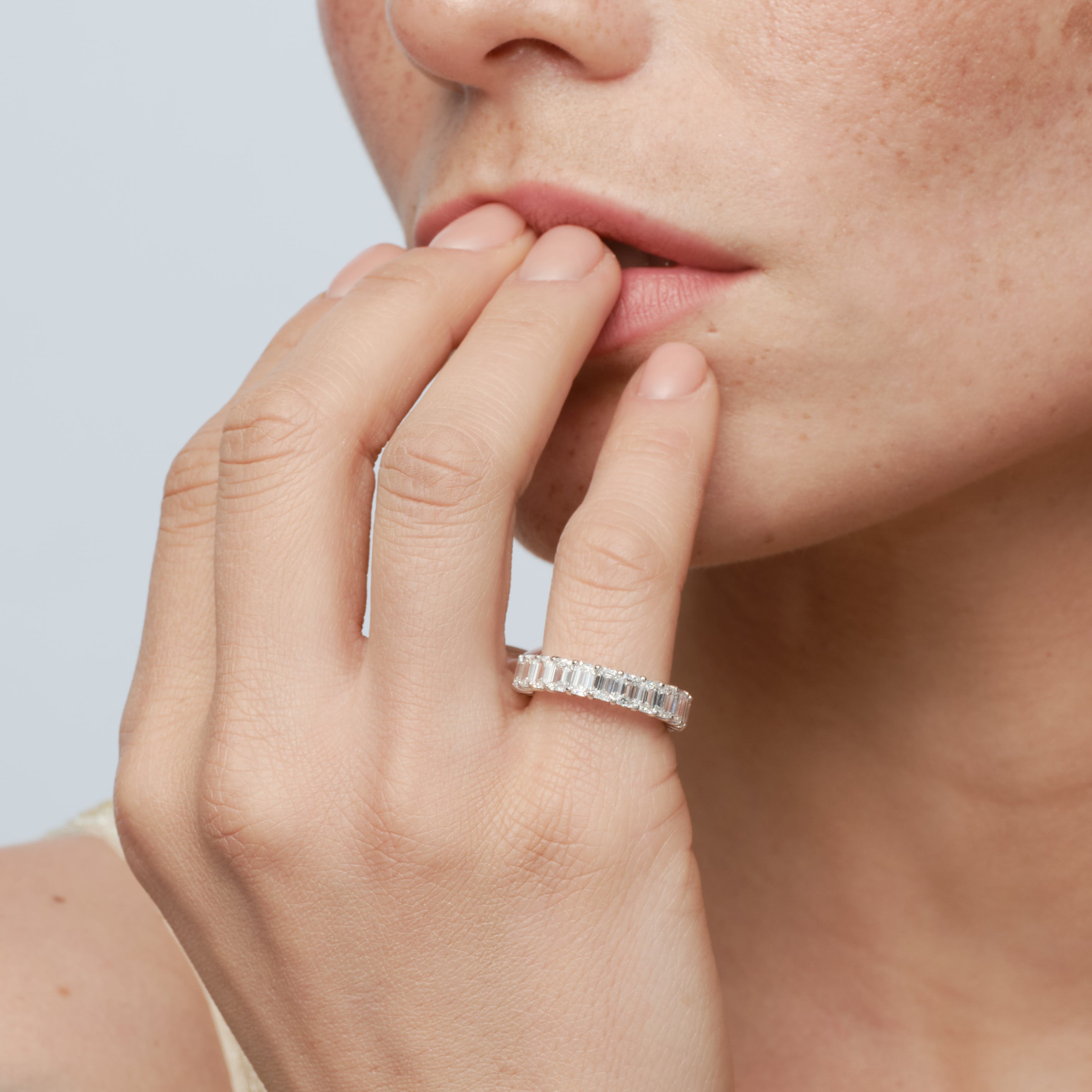
 Diamond eternity band
 Other Gems
 Round
Round
 Emerald
 Oval
Oval
 Pear
Pear
 Marquess
 Cushion
 Radiant
 18k White Gold
 18K Yellow Gold
 18K Rose Gold
 18k Yellow Gold and White Gold

April 23, 2026
Diamond color is one of the four characteristics that determine its quality and price, along with cut, clarity, and carat weight. For white diamonds, color is measured on a scale from D to Z, where D is completely colorless and Z has a visible yellowish tint. Outside of this scale are fancy color diamonds, stones with intense hues such as yellow, pink, or blue, which are valued entirely differently.
When someone starts researching diamonds, the color scale is one of the first concepts that appears, and also one of the most confusing. Why does it start at D and not A? What is the visible difference between a G and an H diamond? And what exactly are fancy color diamonds? This guide answers all of that.
What diamond color is and why it matters
When gemology refers to diamond color, it is actually referring to the absence of color. In white or colorless diamonds, the less color the stone has, the higher its quality and, all other characteristics being equal, the higher its value.
The reason is simple: a completely colorless diamond allows light to pass through freely, without any tint interfering with how that light refracts and projects. The result is the characteristic brilliance we associate with a high-quality diamond. When the diamond has a slight yellow or brown tint, that color absorbs some of the light and reduces the final visual effect.
A diamond's color originates during its formation. The presence of certain elements in the crystal structure determines the hue of the stone. In the case of yellow, the responsible element is nitrogen. In the case of blue, boron. In the case of pink, alterations in the carbon's crystal structure itself.

The GIA Color Scale: D to Z
The international standard for measuring the color of white diamonds was developed by the GIA, the Gemological Institute of America, and is used today by all leading gemological laboratories worldwide, including IGI and HRD.
The scale goes from D to Z. The reason it starts at D and not A is historical: before the GIA established this system in the 1950s, there were several different systems using letters, Roman and Arabic numerals, and subjective descriptions. To establish a clear and distinct starting point from all those previous systems, the GIA decided to begin its scale at the letter D.
These are the categories into which the different grades are grouped:
|
Grades |
Category |
Meaning |
|
D, E, F |
Colorless |
No noticeable tint, even under magnification. The most highly valued. |
|
G, H, I, J |
Near Colorless |
Slight tint that only an expert can detect under controlled conditions. Excellent value for money. |
|
K, L, M |
Faint Tint |
A slight warm hue begins to be perceptible, especially in larger stones. |
|
N to Z |
Visible Tint |
Yellow or brown color is appreciable to the naked eye. Outside the standard quality range for jewelry. |
It is important to understand that the differences between adjacent grades, for example between a G and an H, are practically imperceptible to the naked eye once the diamond is set in jewelry. The grading is done by a gemologist under controlled lighting conditions, comparing the stone with calibrated reference samples. What the untrained eye sees without instruments is very different from what that technical analysis reveals.
Which color grade to choose
The answer depends on several factors: the type of metal in the setting, the diamond's cut, and the priority you give to this parameter within your available budget.
The metal of the setting directly influences how color is perceived. White gold and platinum enhance the stone's whiteness, making even a G or H grade diamond appear more colorless than it is. Yellow gold or rose gold, on the contrary, add a warm tone to the diamond's surroundings, making intermediate grades even less noticeable and even aesthetically pleasing with diamonds of slightly lower grades on the scale.
The diamond's cut also affects how color is seen. Cuts with many facets, like the round brilliant cut, disperse light so intensely that they make color more difficult to detect. Cleaner and more open cuts, such as the emerald cut or baguette cut, have fewer facets and a more direct mirror effect, making any tint more visible.
Stone size matters. In a smaller diamond, color is less noticeable. In larger stones, the tint, however slight, is perceived more easily.
For most people, G and H grades offer an excellent appearance to the naked eye, especially in white gold or platinum settings, and represent a very solid balance between quality and value.
Fancy color diamonds: another category, other rules
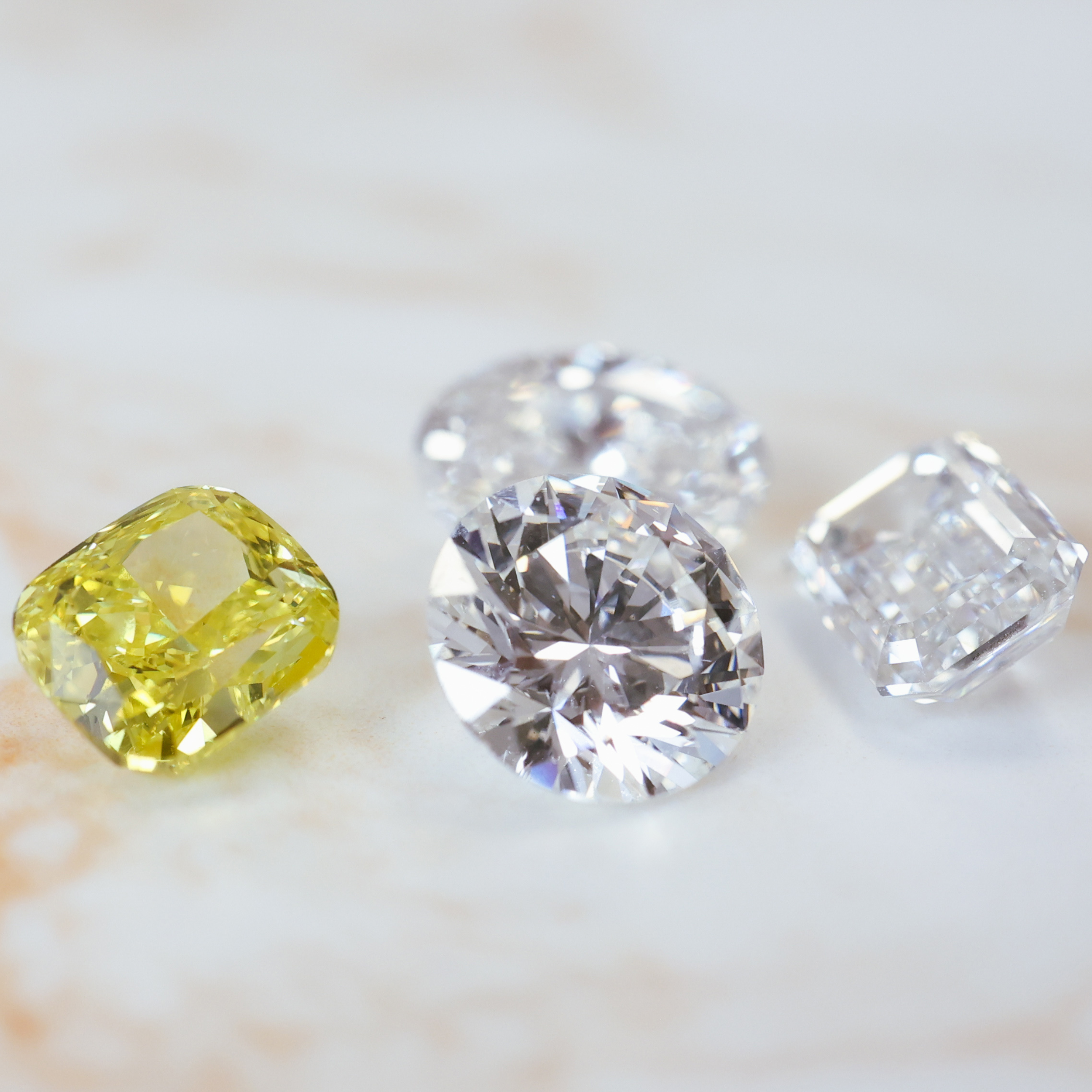
Fancy color diamonds are an entirely different category. These diamonds exhibit an intense, saturated color, beyond the D to Z range. The GIA classifies them with its own system that evaluates three dimensions of color: the hue, which is the color itself; the saturation, which is the intensity of that color; and the tone, which refers to the lightness or darkness of the hue.
The main hues recognized by the GIA are yellow, orange, pink, red, blue, green, purple, and violet, as well as combinations thereof. Within each hue, intensity is graded in levels ranging from Faint to Fancy Vivid, passing through Fancy Light, Fancy, Fancy Intense, and Fancy Deep.
In fancy color diamonds, the logic of value is reversed compared to white diamonds: here, the more intense and saturated the color, the higher the value of the stone.
Yellow diamonds: are the most accessible fancy colors and the most frequent in jewelry. Their color is due to the presence of nitrogen in the crystal structure. A diamond classified as Fancy Vivid Yellow has an intense and uniform hue that clearly differentiates it from a white diamond with a Z tint.
Pink diamonds: are much rarer than yellow ones. Their color is not due to the presence of an external element, but to alterations in the carbon's own crystal structure during the stone's formation. They are among the most sought-after diamonds in international auctions.
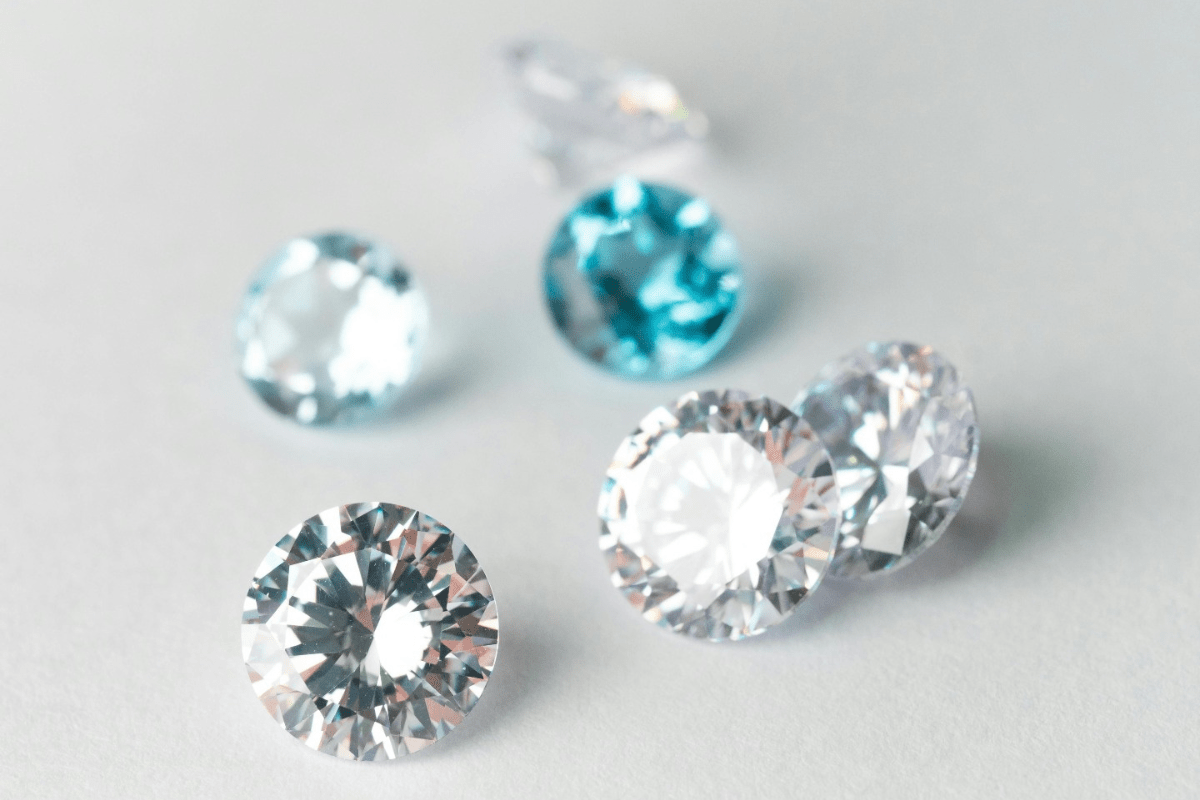
Blue diamonds: In laboratory diamonds, their color can originate from the presence of elements like boron during their growth or through advanced processes that modify their structure. They are extraordinarily curious and some of the most valuable in the world, like the famous Hope Diamond.

Green diamonds: In laboratory diamonds, their color is achieved through advanced processes that replicate the conditions that modify the diamond's structure. Very uncommon, they stand out for their unique character and sophisticated, distinctive aesthetic.
Red diamonds: the rarest of all. There are very few specimens in the world with a certified pure red hue, and their value is extraordinary.
Color in laboratory diamonds
Laboratory diamonds present the same spectrum of colors as natural ones, and are classified with exactly the same criteria and scales.
In white laboratory diamonds, the D-Z scale applies in the same way. The manufacturing process can be controlled to produce diamonds in high color grades, making colorless or near-colorless laboratory diamonds relatively more accessible than their natural equivalents.
In laboratory fancy colors, the manufacturing process also allows for the production of intense hues. Laboratory yellow, pink, or blue diamonds have the same physical and optical properties as natural diamonds of the same color, with the same gemological certification and the same visual appearance, and represent an increasingly present option in designer jewelry.
How diamond color is determined
Color grading is not something that can be done with the naked eye or with just any lighting. Gemologists evaluate the diamond under controlled and standardized light conditions, placing the stone table-down and comparing it with a series of calibrated reference samples from the GIA.
The process requires specialized training and very precise technical conditions. Small variations in lighting or observation angle can alter the perception of color. Therefore, the gemological certificate issued by a recognized laboratory such as the GIA or IGI is the only objective guarantee of a diamond's color grade.
Any significant diamond should be accompanied by such a certificate, which specifies the color grade along with the rest of the 4Cs.
Frequently Asked Questions About Diamond Color
Because before GIA created this scale in the 1950s, there were multiple different grading systems that used the letters A, B, and C, as well as numbers and other criteria. To clearly differentiate itself from all those systems and avoid confusion, GIA decided to start at D.
Yes, it can be noticed.
Although both options are within the range of white diamonds, D and E grades represent the highest level of color purity, completely colorless, while from G onwards a slight warm hue may begin to be perceived, especially in certain sizes, cuts, or types of light.
In high jewelry pieces, where every detail counts, this difference provides a greater sense of whiteness, cleanliness, and sophistication. That is why at The Bright Club we work exclusively with D and E range diamonds.
Not necessarily, but it does change its aesthetics.
Beyond certain color grades, a diamond may exhibit a warmer or slightly yellowish hue, which will be more or less visible depending on the size of the stone and the type of setting.
In some cases, especially with yellow or rose gold, this nuance can integrate better visually. However, in fine jewelry, the whitest possible diamonds are prioritized for their greater luminosity and visual purity.
The case of fancy yellow diamonds is different, as their color is intentional, intense, and
highly valued precisely for its saturation and unique character.
They are distinct categories. A Z diamond is at the lower end of the white diamond scale: it has an undesirable yellowish hue and reduced value. A fancy yellow diamond, on the other hand, has such an intense and saturated yellow color that it falls outside that scale and is classified using the fancy color system, where color is precisely what gives it its value.
There are natural color diamonds, whose color was formed over millions of years under specific geological conditions. There are also treatments that modify a diamond's color, such as irradiation. The gemological certificate specifies whether the color is natural or has been treated, which directly influences the stone's value.
Yes. A fancy yellow or fancy pink lab-grown diamond has the same hue, saturation, and brilliance as a natural diamond of the same grade. It is certified using the same criteria and is physically identical. The only difference is its origin.

Gabriela Melguizo
Founding Partner & Brand Director
Learn more
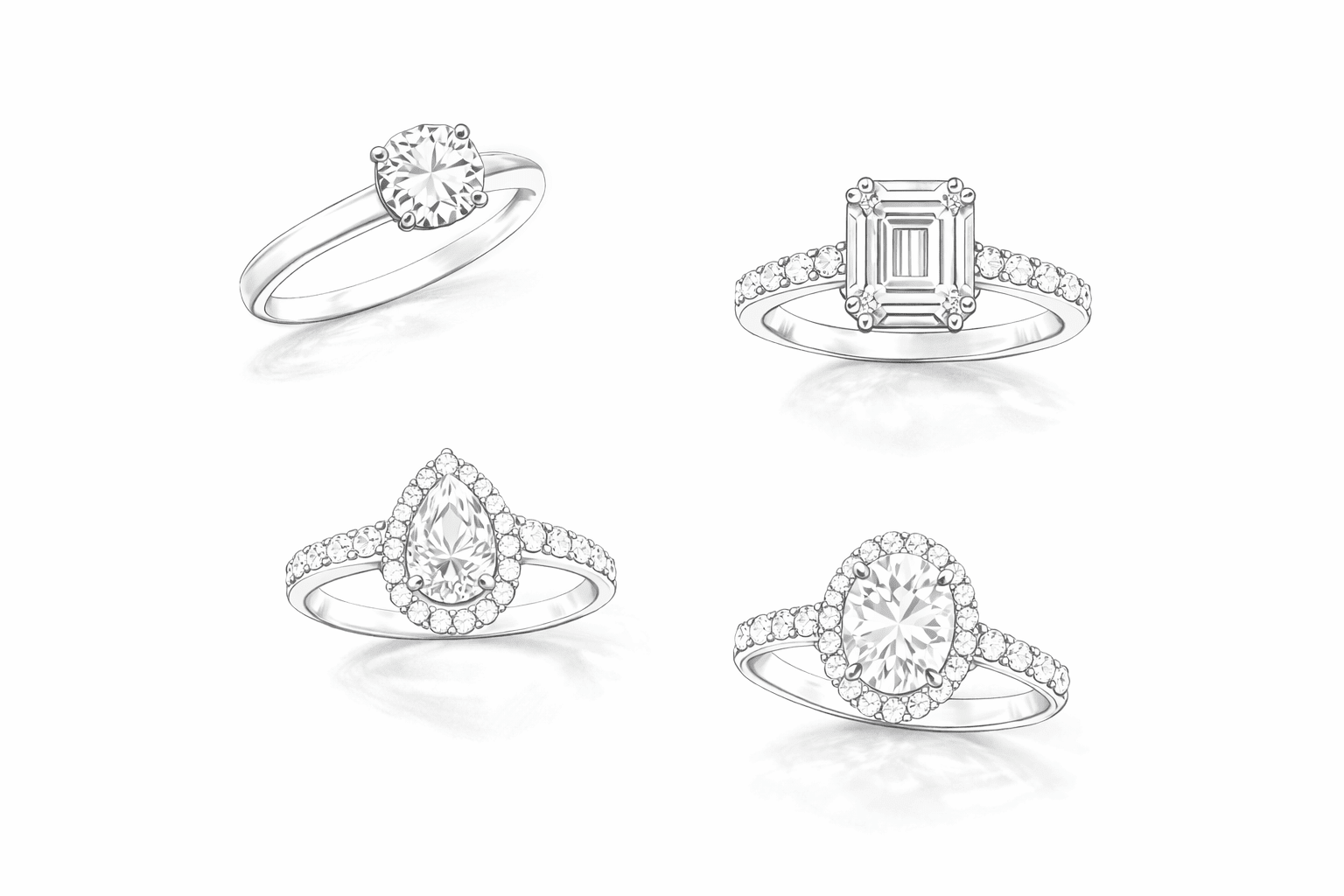
Most popular diamond shapes for engagement rings
There is no perfect diamond shape. The choice depends on personal style, the ring design, and the meaning the couple wants to give it.
Read more
How are lab-grown diamonds made
When someone discovers that lab-grown diamonds exist, the next question almost always comes immediately: how are they made? It's a great question, because understanding the process helps to underst...
Read more
