

 Solitaire
 Hello
Hello
 Paved
Paved
 You and I
 Bezel/Setting
 Vintage
 Three diamonds
 Diamond eternity band
 Other Gems
 Round
Round
 Emerald
 Oval
Oval
 Pear
Pear
 Marquess
 Cushion
 Radiant
 18k White Gold
 18K Yellow Gold
 18K Rose Gold
 18k Yellow Gold and White Gold


June 17, 2026
There's a quiet discipline working behind the scenes every time someone buys a diamond, chooses an engagement ring, or invests in a piece of jewelry with real value. That discipline is gemology, and understanding it can make the difference between a secure purchase and a blind decision.
If you've ever wondered what exactly a gemologist does, why there's a science dedicated to precious stones, or how a gem's value is determined, you've come to the right place. In this article, we break down everything you need to know.
What is gemology and why is it so important?
Gemology is the science that studies gemstones: their origin, chemical composition, physical properties, classification, identification, and valuation. It is not a decorative or secondary discipline; it is a specialized branch of mineralogy that combines knowledge of chemistry, physics, crystallography, and optics to analyze materials that, in many cases, represent investments of thousands of euros.
The term comes from the Latin gemma (precious stone) and the Greek logos (study or treatise). Its history as a formal discipline began to consolidate in the late 19th and early 20th centuries, when the jewelry trade became international and the need arose to establish objective and verifiable criteria for classifying and valuing gemstones.
What makes gemology unique compared to other sciences is its dual nature: it is rigorous and technical when analyzing a stone under the microscope, but also deeply connected to the world of design, jewelry, and luxury. A gemologist not only identifies whether a stone is real or fake; they can also determine its origin, estimate its market value, and detect any artificial treatment it may have undergone.
What a gemologist studies in their specialized training
Understanding what a gemologist is first requires understanding the scope of their training. It's not simply someone who can recognize a precious stone by sight. A certified gemologist has gone through a rigorous training process that covers multiple areas of knowledge.
During their training, a gemologist learns to identify over a hundred different types of gems, both natural and synthetic, and simulants. They learn to use specialized instruments such as the refractometer, spectroscope, gemological microscope, or ultraviolet light to analyze optical properties, density, hardness, and crystal structure. They also acquire knowledge of gem markets, supply chains, and international certification systems.
The leading gemological institutions worldwide are the Gemological Institute of America (GIA), the International Gemological Institute (IGI), and the Hoge Raad voor Diamant (HRD), among others. Obtaining certification from one of these institutions is the de facto standard in the industry, and it is precisely the type of documentation that accompanies quality gems when they are traded transparently.
The properties a gemologist evaluates in each stone
When a gemologist examines a stone, they don't look at it intuitively. They apply a systematic analysis protocol based on very specific physical and optical properties. Knowing these properties also helps you as a consumer to understand the certificates that accompany a piece of jewelry.
| Property | What it measures | Why it matters |
|---|---|---|
| Color | Hue, saturation, and brightness of the gem | Determines rarity and aesthetic value |
| Clarity | Inclusions and internal or external flaws | Affects transparency and durability |
| Cut | Proportions, symmetry, and finish of the cut | Directly influences light reflection |
| Carat Weight | Mass of the stone (1 ct = 0.2 grams) | Key factor in economic valuation |
| Refractive Index | How light bends when passing through the gem | Helps identify the type of mineral |
| Hardness (Mohs scale) | Resistance to scratching | Determines suitability for different jewelry uses |
| Specific Gravity | Weight of the gem relative to an equal volume of water | Useful for differentiating similar-looking gems |
| UV Fluorescence | Stone's reaction under ultraviolet light | Indicator of treatments or certain origins |
These are the 8 fundamental properties that a gemologist most frequently analyzes. Each one provides an additional layer of information that, together, allows for the construction of a complete profile of a gem.
Gemology and lab-grown diamonds: an essential relationship
In the current jewelry landscape, gemology has gained renewed relevance thanks to the emergence of lab-grown diamonds. These stones, created through advanced technological processes such as HPHT (High Pressure High Temperature) or CVD (Chemical Vapor Deposition), are chemically identical to natural diamonds. And precisely there lies the challenge for modern gemology.
Distinguishing a lab-grown diamond from one extracted from the earth cannot be done by sight alone, nor even with conventional instruments. It requires advanced spectroscopic analysis equipment and specialized gemologists. This reality has prompted major gemological institutes to develop new identification methodologies and update their certification systems to accurately reflect the origin of each stone.
For a consumer, this has a direct implication: when you buy a lab-grown diamond certified by a reputable gemological institution, you are backed by the same rigorous science that has valued gems for over a century. The certificate is not just a piece of paper; it represents the work of a gemologist behind every facet of your stone.

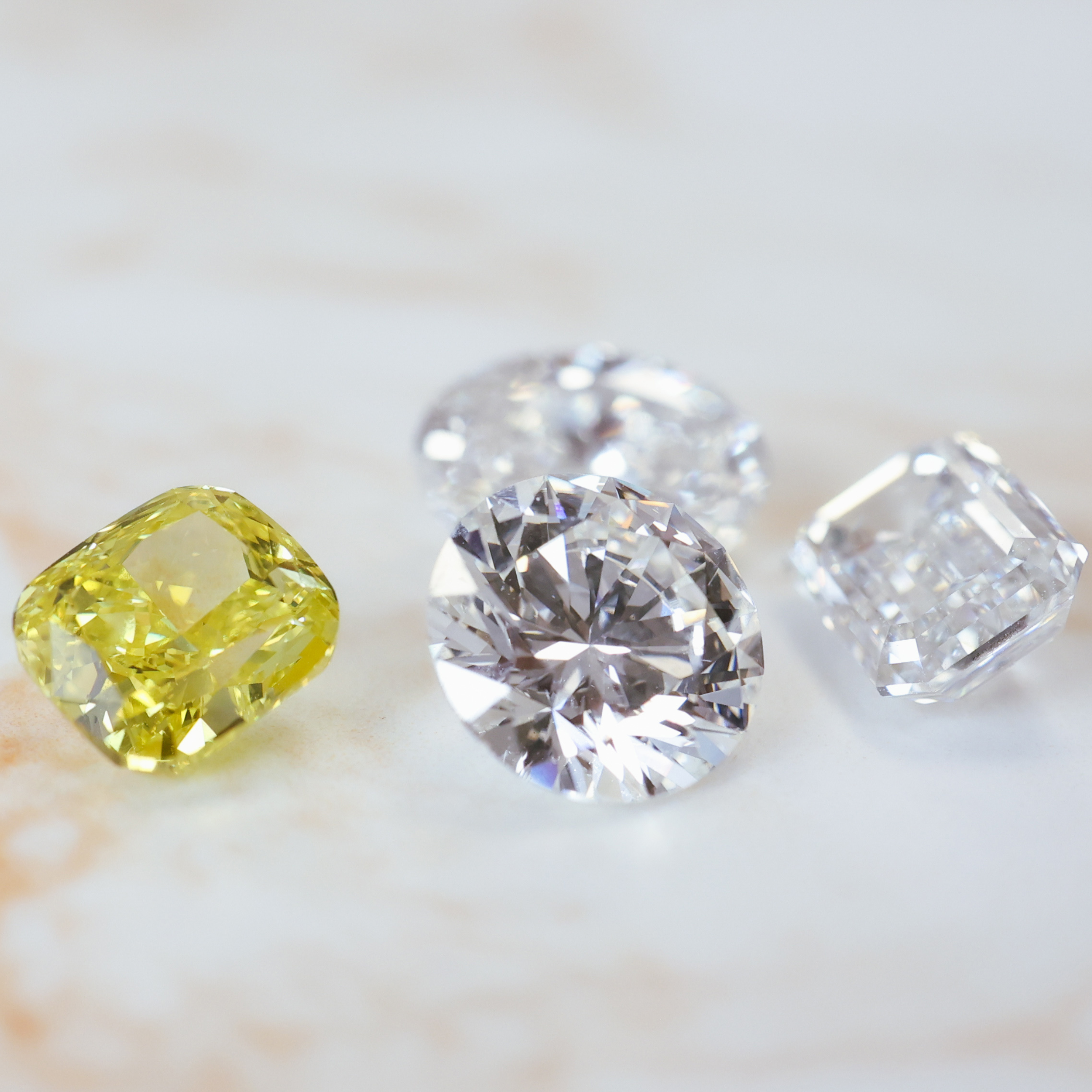
Lab-grown diamonds of different shapes
Why gemology is your best ally when buying jewelry
Many people approach the world of jewelry with enthusiasm, but without the tools to evaluate what they are buying. Gemology exists, in part, to protect the consumer. And understanding its fundamentals, even in a basic way, makes you a much more informed and confident buyer.
Here are the main reasons why gemology should matter to you as a consumer:
- Guarantee of authenticity. A gemological analysis certifies that the stone is what the seller claims it is, eliminating the risk of simulants or fraud.
- Transparency about treatments. Many gems undergo heat treatment, irradiation, or fracture filling. A gemological certificate reveals all of them.
- Objective valuation. You will know exactly what you are paying for and why, based on universal technical criteria, not the subjective opinion of the seller.
- Traceability of origin. Increasingly, consumers want to know where their stone comes from. Gemology provides the tools to trace it.
- Support for insurance and inheritance. A gemological report is a legal document that facilitates the appraisal, insurance, and transfer of a valuable piece of jewelry.
The role of the gemologist in today's jewelry world
The gemologist is not just a laboratory scientist. In today's jewelry sector, their profile has diversified enormously. There are gemologists who work as independent appraisers, others who collaborate with auction houses to authenticate historical pieces, and others who are part of design teams in jewelry brands to ensure the quality of each stone before it reaches the display case.
In the universe of lab-grown diamonds, the gemologist's role has an additional, very relevant dimension. Since these stones are physically indistinguishable from natural diamonds to the untrained eye, the gemologist becomes the guarantor of trust: they certify that a stone is exactly what it is declared to be, whether of natural or lab-grown origin, without one being better than the other, but simply different.
Ethics also form part of gemological work. A competent gemologist works not for the seller, but for the objective truth about the stone. This independence is what gives real value to their pronouncements and makes their certificates recognized worldwide.
How gemology transforms the experience of buying a diamond
Buying a diamond is one of the most significant purchasing decisions a person can make. It is usually linked to unforgettable life moments: an engagement, an anniversary, a celebratory gift. This emotional weight is real and legitimate, but it should not be the only decision criterion.
Gemology provides the rational counterbalance that such an important purchase needs. It gives you the vocabulary to ask the right questions, the criteria to compare two stones objectively, and the assurance that what you are buying has been verified by experts. Instead of blindly trusting what you are told, you can read a certificate, understand its parameters, and make a truly informed decision.
At The Bright Club, we work with certified lab-grown diamonds precisely because we believe that transparency is not a bonus, but a standard. Every stone we offer is backed by the gemological science you've just learned about in this article. Because a beautiful piece of jewelry also deserves to be an honest piece of jewelry.
Gemology as a gateway to the universe of gemstones
If this article has piqued your curiosity, gemology has much more to offer. It is a fascinating discipline that connects geology with art, history with technology, and science with emotion. Some people start by being interested in gemology because they want to buy jewelry intelligently and end up making it a lasting passion.
Understanding what gemology is not only makes you a better buyer; it also makes you more aware of the extraordinary process behind each gemstone. Millions of years of pressure and temperature in the case of natural diamonds, or weeks of precision technology in the case of lab-grown ones, culminate in a stone that a gemologist analyzes for hours before issuing a brief report.
This synthesis between the grand and the meticulous is, at heart, what makes this science and the stones it studies so special.

Gabriela Melguizo
Founding Partner & Brand Director
Learn more
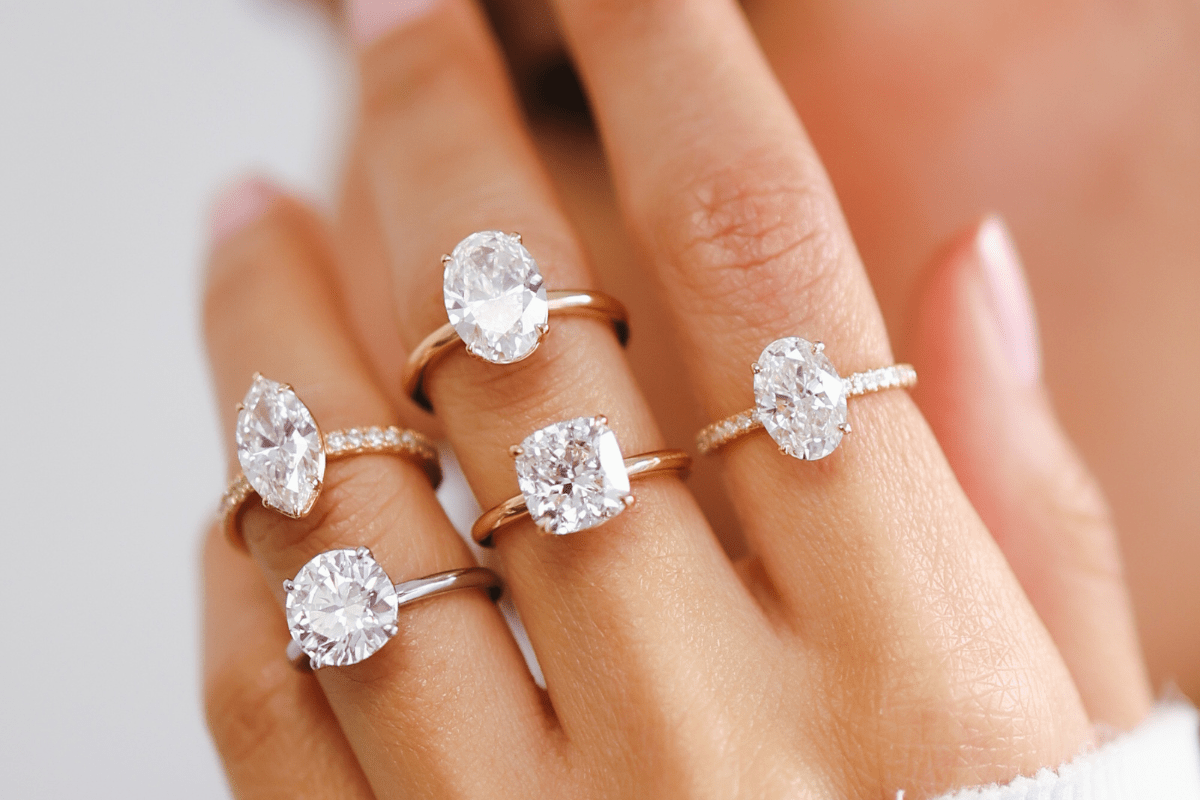
All the types of diamonds that exist and how to choose the right one for you
Choosing a diamond is one of the most significant decisions a person can make. It's not just a purchase, but a statement: of love, values, and personal taste. However, when one enters the world of ...
Read more
The Facets of a Diamond and the Secret Behind its Brilliance
There's something about a diamond that captures the eye. It's not just its size or transparency, but that play of light that appears within the stone. The explanation lies in something very specifi...
Read more
