

 Solitaire
 Hello
Hello
 Paved
Paved
 You and I
 Bezel/Setting
 Vintage
 Three diamonds
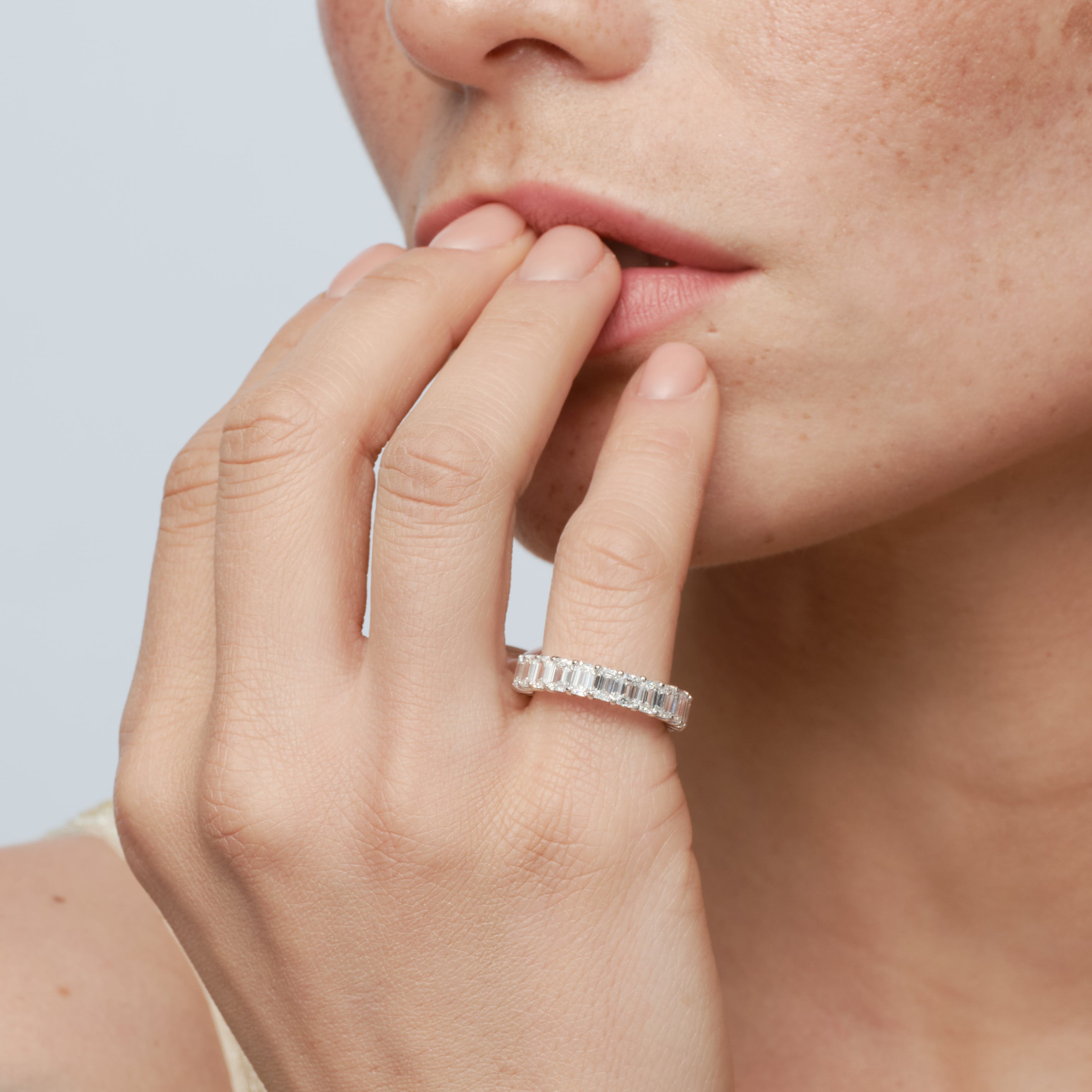
 Diamond eternity band
 Other Gems
 Round
Round
 Emerald
 Oval
Oval
 Pear
Pear
 Marquess
 Cushion
 Radiant
 18k White Gold
 18K Yellow Gold
 18K Rose Gold
 18k Yellow Gold and White Gold

June 10, 2026
Choosing a diamond is one of the most significant decisions a person can make. It's not just a purchase, but a statement: of love, values, and personal taste. However, when one enters the world of diamonds for the first time, the sheer number of terms, classifications, and types of diamonds can be overwhelming. This article exists to change that.
At The Bright Club, we've been working for some time to ensure that everyone makes this decision with clarity, confidence, and the necessary knowledge to avoid mistakes. Because understanding the different types of diamonds that exist isn't just a technical matter: it's the difference between buying a stone and choosing the right stone for you.
What defines a diamond before discussing types
Before classifying the different types of diamonds and their names, it's helpful to understand what makes a diamond a diamond. In essence, it's pure carbon crystallized under extreme conditions of pressure and temperature. This crystalline structure is responsible for its exceptional hardness, the highest of any known mineral, and its ability to disperse light into that spectrum of colors we all recognize as the diamond's "fire."
This definition, however, doesn't limit a diamond to a single origin or form. Today, there are classes of diamonds that differ in how they were formed, their internal chemical composition, how they have been cut, and their intended use. Knowing these differences is the first step towards making an informed decision.
What all types of diamonds do share is that they are evaluated under the same universal quality system: the 4 Cs (color, clarity, cut, and carat). These four variables determine the appearance, brilliance, and value of any diamond, regardless of its origin or form. Having them clear from the outset will allow you to compare options with real criteria.
Types of diamonds by origin
This is probably the most relevant classification today, especially in a context where sustainability and supply chain ethics are increasingly important.
Natural or mined diamonds
These are diamonds formed in the Earth's mantle over millions of years and subsequently extracted through mining processes. Historically, their geological rarity has been one of the main arguments for their value.
However, technological advancements have made it possible to replicate the exact same physical, chemical, and optical conditions in a laboratory, leading to diamonds that are, scientifically, real.
The main difference between the two is not in their composition or appearance, but in their origin.
Furthermore, mining involves an environmental and social impact that more and more consumers are taking into account when choosing a piece of jewelry.
Lab-grown diamonds
Lab-grown diamonds are chemically identical to natural diamonds. They have the same crystalline carbon structure, the same hardness, the same refractive index, and the same brilliance. The difference lies in their origin: they are created in controlled environments that reproduce the pressure and temperature conditions under which diamonds form in nature.
There are two main creation methods: the HPHT (High Pressure High Temperature) process and the CVD (Chemical Vapor Deposition) process. Both produce real, certifiable diamonds of a quality comparable to the best mined examples.
At The Bright Club, we specialize in lab-grown diamonds precisely because we believe that quality and ethics do not have to be at odds. A lab-grown diamond allows access to larger and higher quality stones with a more efficient investment, without compromising the values of the wearer.
Synthetic diamonds or simulants
This term causes confusion and deserves an important clarification. When referring to synthetic stones in the strict sense, it refers to stones that imitate the appearance of a diamond but do not share its chemical composition. Moissanite or cubic zirconia are common examples.
These stones have their place in the market and can be perfectly valid options depending on the use, but it is essential not to confuse them with lab-grown diamonds, which are real diamonds in every sense. The difference is technical and substantial.
Types of diamonds according to their internal scientific classification
Few consumers are aware of this classification, but it is fascinating and explains some of the color variations that sometimes surprise in stones.
Gemologists classify diamonds into types based on the presence or absence of certain nitrogen or boron atoms in their crystal structure. This classification is not just academic: it has direct consequences on the visual appearance of each stone.
| Diamond Type | Main Characteristics | Typical Color |
|---|---|---|
| Type Ia | Contains nitrogen in clusters. Most common (approx. 98% of natural diamonds). | Colorless to pale yellow |
| Type Ib | Isolated nitrogen. Very rare in nature. | Intense yellow or orange |
| Type IIa | No detectable nitrogen. The purest and most transparent. | Colorless or slightly pink |
| Type IIb | Contains boron. Extremely rare. | Blue or grayish blue |
Type IIa diamonds are the most valued from an optical purity standpoint. Many of the most famous historical diamonds belong to this category. Type IIb diamonds, with their characteristic blue hue, are extraordinarily rare and fetch record prices at international auctions.
This classification is also relevant when we talk about colored diamonds, as the internal type largely determines the possible color range.
All types of diamonds by color
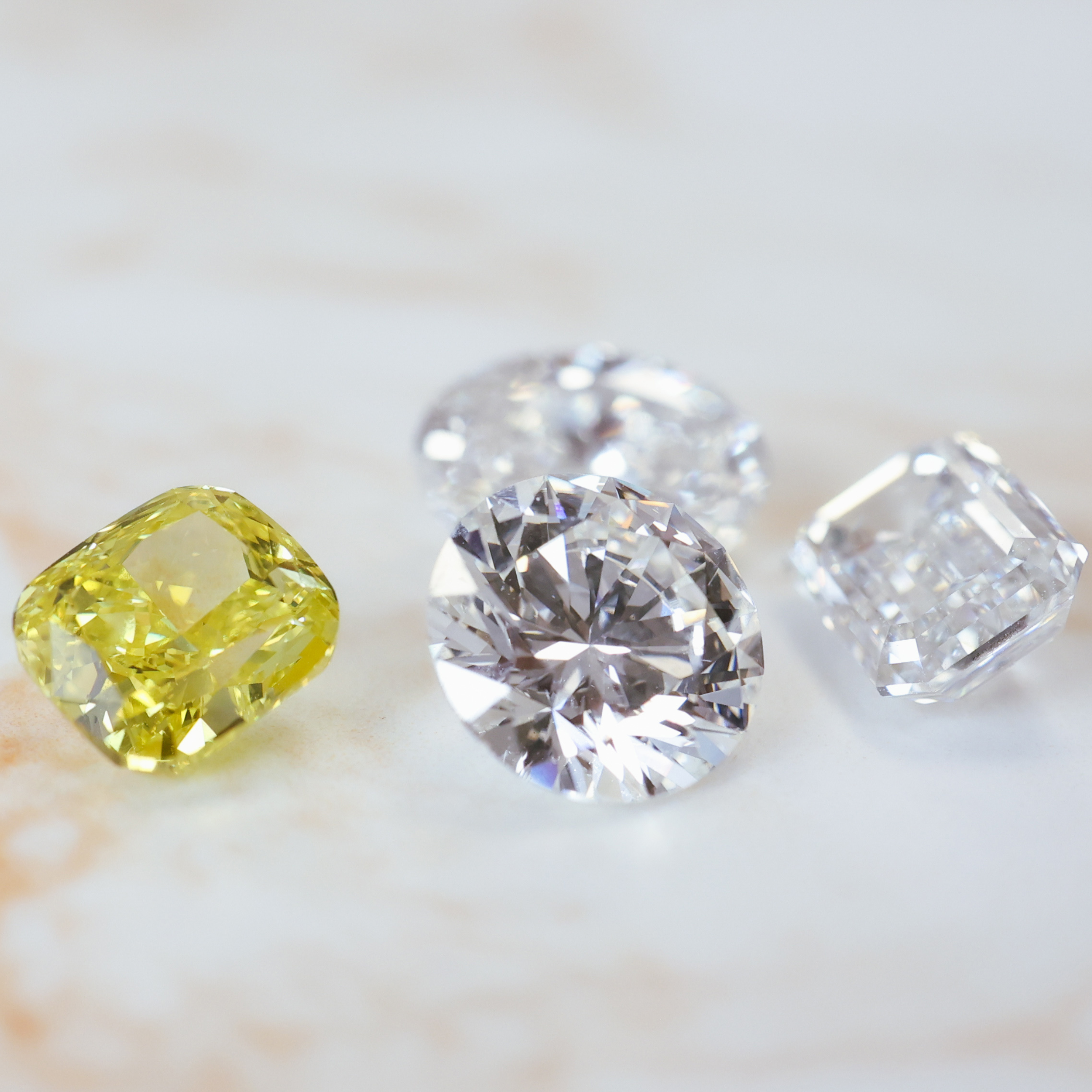
When one thinks of a diamond, the mental image is usually that of a transparent, colorless stone. But colored diamonds exist, whether natural or lab-grown, and they have their own significance and appeal.
The standard scale for colorless diamonds ranges from the letter D (absolutely colorless) to Z (with visible yellow or brown tints). Within this scale, D-F grades are considered exceptional, G-J are nearly colorless and represent excellent value for money, and from K onwards, tints begin to be perceptible to the naked eye.
But outside this scale exist what are called fancy or intense colored diamonds, which are not measured on the D-Z scale but on their own saturation system. Among the most sought-after types of diamonds and their meaning in this group are:
- Yellow or canary diamond: symbolizes optimism and originality. It is one of the most accessible among colored diamonds.
- Pink diamond: associated with romance and femininity. Extremely rare in nature.
- Blue diamond: linked to serenity and nobility. Its color is due to the presence of boron in the structure.
- Black diamond: elegant and timeless. Its dark color comes from evenly distributed graphite inclusions.
- Green diamond: very rare in nature. It is associated with hope and renewal.
- Red diamond: the rarest of all existing colored diamonds. Only a few specimens are known in the world.
Lab-grown diamonds can reproduce all these colors with a consistency and quality difficult to achieve in natural extraction, making them an especially attractive option when seeking a colored diamond for an engagement ring or a special piece.
Types of diamonds for rings by cut shape
The cut is the human intervention on the rough diamond. It is the art and science of transforming a rough stone into the jewel we know. The cut shape not only affects the visual appearance: it also determines how the stone interacts with light and, therefore, how much it sparkles.
These are the most important types of diamonds and their cut names in jewelry:
Round brilliant cut
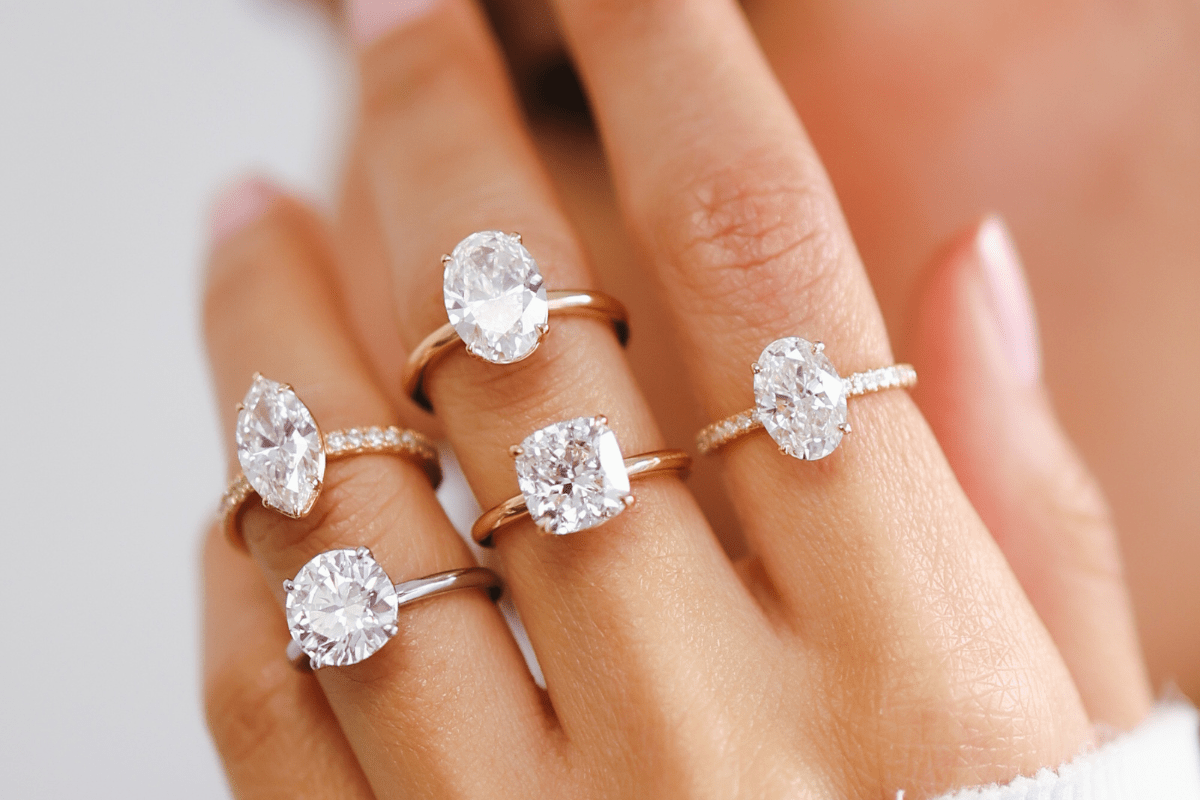
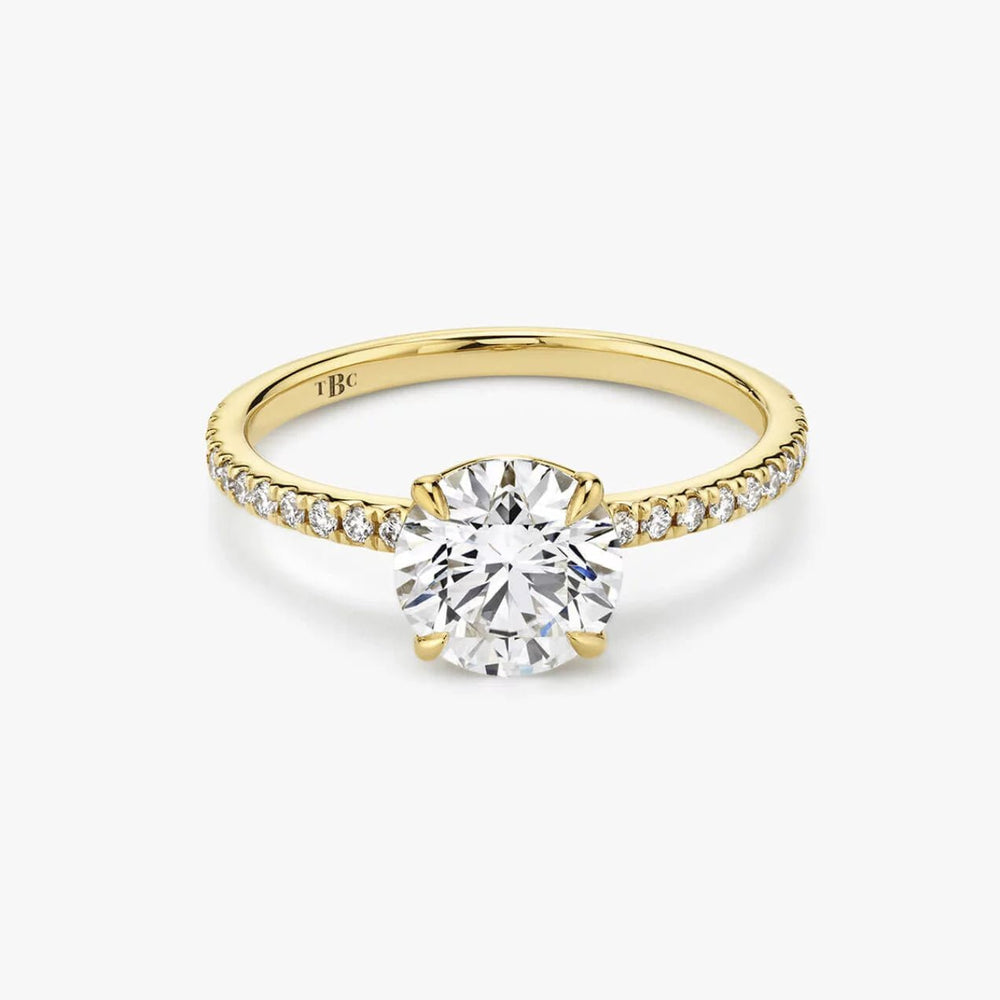
Round cut diamonds are the most popular shape in the world and the one that best optimizes brilliance. It features 58 carefully calculated facets to reflect the maximum amount of light possible. It is the benchmark when talking about a type of diamond for classic engagement rings.
Princess cut
Square in shape with sharp corners, it is the second most demanded cut. It retains more of the rough diamond's weight during the cutting process, making it slightly more accessible in price for the same carat weight. It has a brilliant and contemporary sparkle.
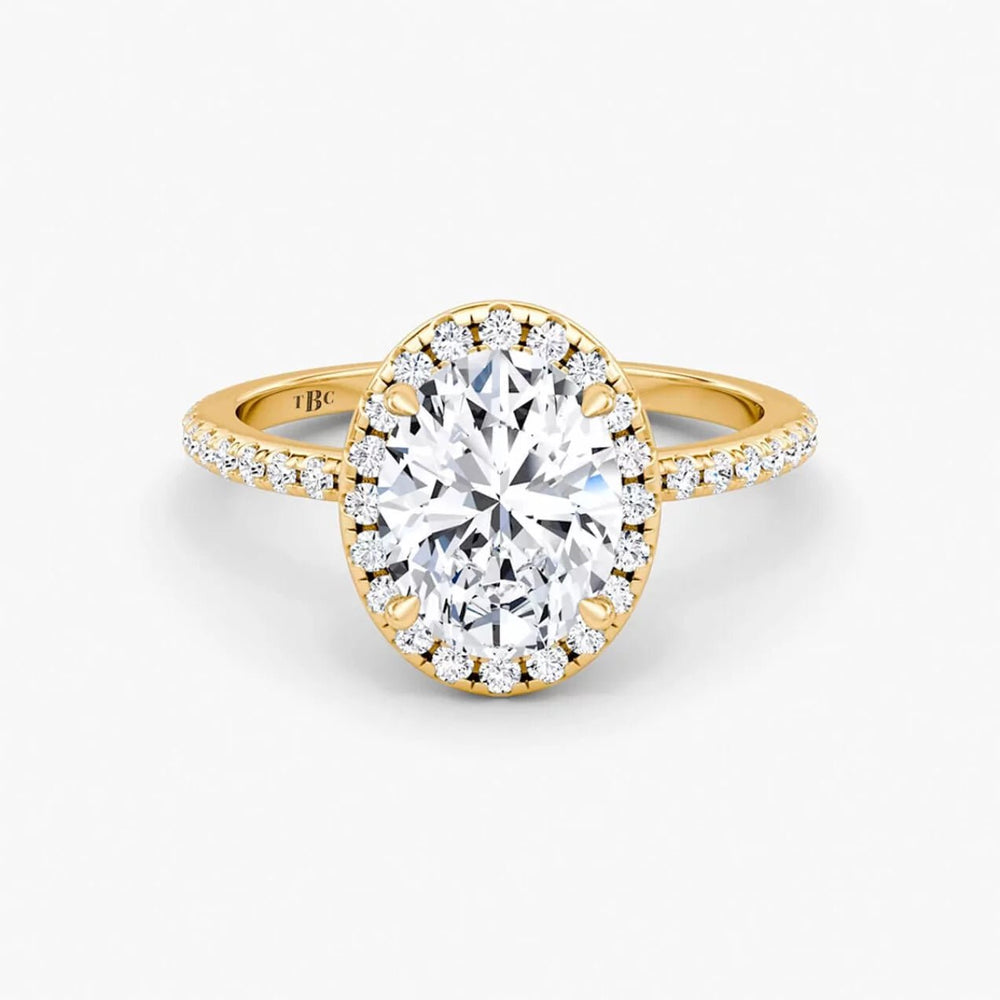
Oval cut
The oval cut has the virtue of visually elongating the finger thanks to its elongated proportion. It maintains the brilliance level of the round cut and has become one of the most sought-after in recent years for its balance between elegance and modernity.
Cushion cut
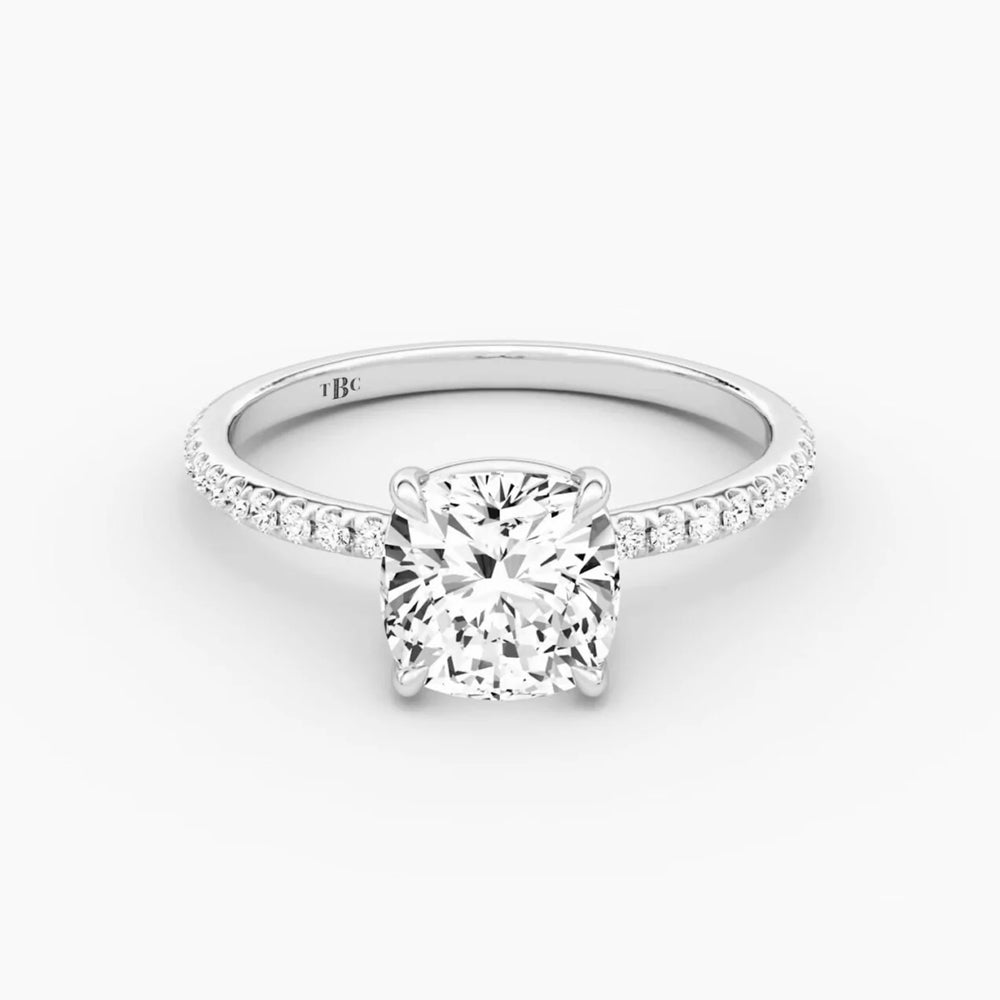
Cushion cut diamonds, with rounded corners and a profile reminiscent of a cushion, have a very distinct romantic and vintage character. Their light dispersion creates broad, soft flashes that many describe as the warmest and most evocative.
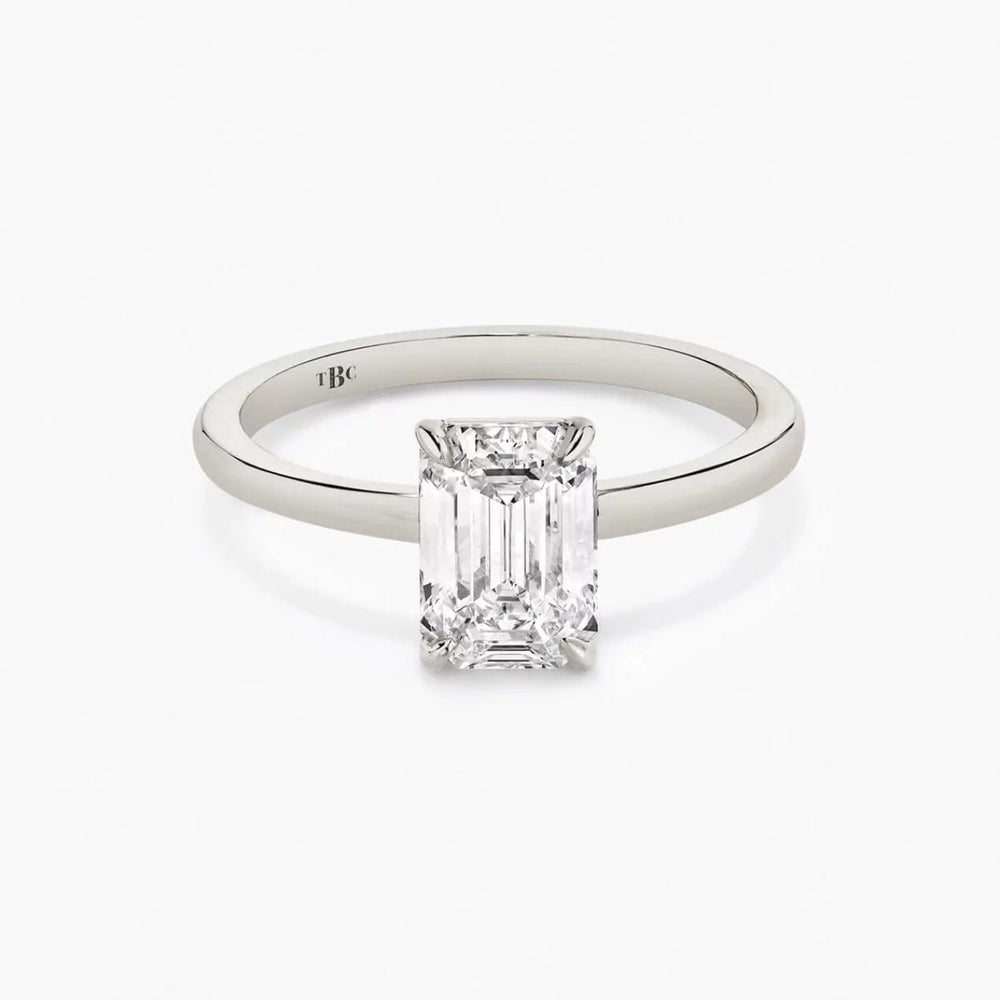
Emerald cut
Unlike the previous cuts, the emerald cut does not seek explosive brilliance but clarity and transparency. Its stepped facets create a "hall of mirrors" effect that highlights the stone's internal purity. For this reason, choosing a high-clarity diamond is particularly important for this cut.
Marquise cut
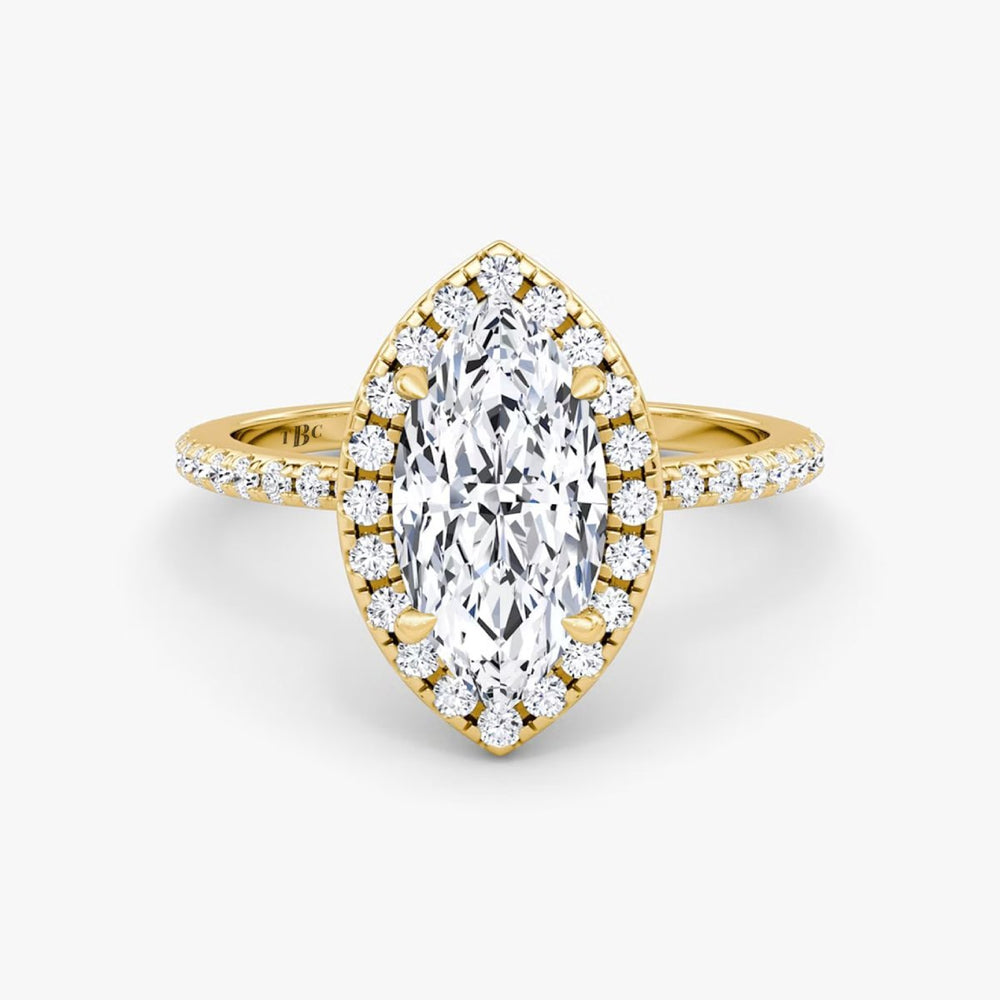
Elongated and pointed at both ends, the marquise cut has a history linked to the French court and conveys a very particular elegance. It also visually elongates the finger and can make the stone appear larger than its carat weight indicates.
Other notable cuts
In addition to the above, other shapes have their own character and loyal following:
- Pear cut or teardrop: combines the roundness of the brilliant with the point of the marquise.
- Heart cut: highly symbolic, especially popular in engagement rings.
- Radiant cut: rectangular with trimmed corners, combines the elegance of the emerald with the brilliance of the brilliant.
- Asscher cut: square and stepped, with a deep, almost hypnotic visual effect.
How to choose among all the types of diamonds that exist
Once you know the different types of diamonds, the most personal question of all arises: which one is right for you? There is no universal answer, but there is a thought process that can guide you.
The first thing is to define the use you will give to the piece. A diamond for an engagement ring worn every day has different requirements than a diamond for earrings. The durability of the setting and the protection of the stone's edges are practical factors that should not be overlooked.
The second is to think about what you value most: visible size, brilliance, internal purity, or color. These four dimensions are rarely all maximized at once with the same budget, so having a clear hierarchy greatly facilitates decision-making. A diamond with an excellent cut and moderate carat weight can sparkle more and be more impactful than one with greater weight but a mediocre cut.
The third, and perhaps most important today, is to consider the origin and values behind the stone. Lab-grown diamonds offer access to superior quality with a significantly smaller environmental footprint. For many people, that argument is no longer secondary: it is the main criterion.
Why at The Bright Club we bet on lab-grown diamonds
At The Bright Club, we don't just sell diamonds. We help people find their diamond: the one that fits their values, their aesthetic, and their reality. That's why our specialization in lab-grown diamonds is not a trend, but a conviction.
A lab-grown diamond certified by international reference laboratories is a real diamond in every technical and emotional sense. It has the same brilliance, the same hardness, the same inner fire. And it also allows more budget to be allocated to what is truly seen: the cut, the size, the quality of the cut.
If you are in the process of choosing a diamond and want to do it with all the information on the table, you are in the right place. At The Bright Club, you will find not only the stone, but the support that decision deserves.

Gabriela Melguizo
Founding Partner & Brand Director
Learn more

Brilliant vs. Diamond: The Ultimate Guide
Quick answer: a diamond is the gemstone; brilliant is the cut. A brilliant is, in fact, a diamond that has been given a round shape with 57 or 58 facets to maximize its light reflection. Therefore,...
Read more
Gemology, the science that gives value to every gemstone
There's a quiet discipline working behind the scenes every time someone buys a diamond, chooses an engagement ring, or invests in a piece of jewelry with real value. That discipline is gemology, an...
Read more
